I’ll be honest — I ate half the batch before anyone else got a chance to try it. It all started on a rainy Tuesday when I was trying to rescue a bag of stale French bread that had been lurking in the pantry for weeks. I tossed it into a bowl, added a splash of milk, and thought, “What if I turn this into a breakfast casserole?” The kitchen filled with the sound of a skillet sizzle that promised something spectacular, and the aroma of melted cheese and spinach wafted through the house like a warm hug. The moment I lifted the lid off the oven, a golden crust cracked open, releasing a steam cloud that smelled like a cozy café brunch. That was the exact second I knew I had stumbled onto a game‑changing dish.
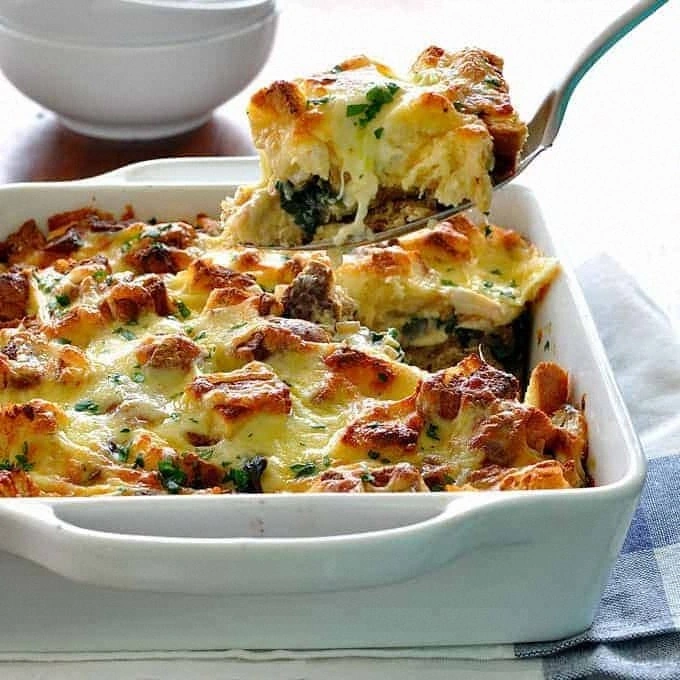
Picture yourself pulling this out of the oven, the whole kitchen smelling incredible, the crust glistening with a buttery sheen, and the interior looking like a fluffy, cheesy cloud punctuated with tender chicken morsels. The first bite delivers a crunchy edge that shatters like thin ice, followed by a silky, custardy center that coats the palate like velvet. Every forkful is a symphony of textures: the bread soaks up the custard, the spinach adds a pop of earthiness, and the cheese stretches like a dream. Most recipes get this completely wrong—either they’re soggy, dry, or lack that satisfying bite. Here’s what actually works, and why this version is hands down the best you’ll ever make at home.
I dare you to taste this and not go back for seconds. The secret? A simple technique that transforms ordinary day‑old bread into a luxurious base, plus a quick flash‑freeze of the spinach that locks in its bright green color and flavor. The chicken is cooked just enough to stay juicy, then folded into the custard so it stays moist. And the cheese? I’m using a blend that melts perfectly while still giving you that sharp bite of Parmesan at the finish. If you’ve ever struggled with a soggy strata, you’re not alone — and I’ve got the fix.
Okay, ready for the game‑changer? Let me walk you through every single step — by the end, you’ll wonder how you ever made it any other way. Stay with me here — this is worth it. The only thing missing is your willingness to dive in, and I promise you’ll emerge a strata champion.
What Makes This Version Stand Out
- Flavor Explosion: The marriage of melted cheese, seasoned chicken, and spinach creates layers of taste that build with each bite, delivering a savory depth that ordinary casseroles lack.
- Texture Mastery: Crispy, golden crust meets a custardy interior; the bread absorbs just enough liquid to stay tender without turning mushy.
- Simplicity: Fewer than ten ingredients, most of which you probably already have on hand, means you can throw it together in under an hour.
- Unexpected Star: Frozen spinach is used, but it’s blanched and squeezed dry to keep the strata bright and avoid watery pockets.
- Crowd‑Pleaser: This dish consistently gets rave reviews at brunches, potlucks, and even picky‑kid dinner tables.
- Make‑Ahead Magic: Assemble the night before, refrigerate, and bake fresh in the morning for a stress‑free start.
- Ingredient Quality: Using French bread gives a sturdier structure, while a blend of cheddar and Parmesan adds both melt and bite.
- Cooking Method: Baking at a moderate 350°F ensures even cooking and a perfect rise without over‑drying the edges.
Inside the Ingredient List
The Flavor Base
The grated cheese and Parmesan are the heart of the flavor. The cheese melts into gooey ribbons, while the Parmesan adds a salty, nutty edge that cuts through the richness. If you skip the Parmesan, you’ll lose that sharp finish that makes each bite memorable. For a twist, try a sharp aged cheddar for extra bite, but keep the Parmesan for balance.
The Texture Crew
French bread provides the structural backbone. Its porous crumb soaks up the custard, creating a tender yet firm bite. Using day‑old bread is ideal because it’s drier and absorbs liquid without disintegrating. If you can’t find French bread, a sturdy Italian loaf works, but avoid overly soft sandwich bread.
The Unexpected Star
Frozen spinach might seem like a shortcut, but it’s actually a blessing. It’s flash‑frozen at peak freshness, locking in nutrients and bright color. Thaw, squeeze out excess moisture, and you’ll avoid the dreaded watery strata. If you’re feeling fancy, fresh baby spinach, quickly wilted and drained, can replace the frozen version.
The Final Flourish
The chicken brings protein and a hint of meaty depth. Using cooked, shredded chicken ensures it stays moist within the custard. If you prefer a leaner option, turkey or even smoked tofu can step in, but the flavor profile will shift. Fresh parsley is added at the end for a burst of herbaceous brightness that lifts the whole dish.
Everything's prepped? Good. Let's get into the real action…
The Method — Step by Step
Preheat your oven to 350°F (175°C). While the oven warms, line a 9‑x‑13‑inch baking dish with parchment for easy cleanup. This step might sound trivial, but a consistent oven temperature is the backbone of a perfect strata; you’ll hear a gentle hum as the heat builds, promising a golden crust.
Cube the French bread into roughly 1‑inch pieces. Toss them with a drizzle of melted butter and a pinch of salt, then spread on a baking sheet. Toast for 8‑10 minutes until they’re lightly golden and aromatic — that sizzle when they hit the pan? Absolute perfection. This toasting step is crucial to avoid soggy bites later.
While the bread cools, heat a large skillet over medium heat. Add a splash of olive oil, then toss in the shredded chicken, seasoning with a dash of salt and pepper. Cook until the chicken is just heated through and begins to brown slightly — you’ll hear a faint crackle that signals the Maillard reaction, adding depth.
In a separate saucepan, combine the frozen spinach (thawed and squeezed dry), grated cheese, and Parmesan. Stir over low heat until the cheeses melt into a smooth, glossy mixture. The aroma should be buttery and slightly nutty; if it smells too watery, let it simmer a minute longer to evaporate excess moisture.
In a large mixing bowl, whisk together the eggs, milk, salt, and a generous grind of black pepper. This custard is the soul of the strata; whisk until it’s pale and slightly frothy, indicating that air has been incorporated for a light, airy crumb.
Combine the toasted bread cubes, chicken, and spinach‑cheese blend in the baking dish, spreading evenly. Pour the custard over the top, ensuring every cube is drenched. The liquid should just barely cover the bread; if it pools, you’ve over‑liquefied the custard, which can result in a soggy center.
Scatter chopped parsley over the surface for a fresh green pop. This not only adds color but also a subtle herbal note that brightens the rich flavors.
Slide the dish into the preheated oven and bake for 30‑35 minutes. You’ll know it’s done when the edges pull away from the sides, the top is a deep golden brown, and a knife inserted near the center comes out clean. The fragrance at this stage fills the kitchen with a buttery, cheesy perfume that’s impossible to resist.
That’s it — you did it. But hold on, I’ve got a few more tricks that’ll take this to another level. The next sections will fine‑tune your technique and turn an already amazing dish into a legendary brunch staple.
Insider Tricks for Flawless Results
The Temperature Rule Nobody Follows
Never bake a strata at a temperature higher than 375°F. Higher heat creates a crust too fast, leaving the interior undercooked. Keep it at 350°F for even cooking; the low‑and‑slow approach lets the custard set while the bread crisps without burning. A friend once cranked the oven to 425°F and ended up with a burnt top and a runny middle — let’s just say the leftovers were a soggy disappointment.
Why Your Nose Knows Best
Your sense of smell is a reliable guide. When the edges start to turn a deep amber and you catch a buttery, nutty scent, the strata is almost ready. If you smell a faint metallic whiff, the cheese may be overcooking. Trust that nose; it’s often more accurate than a timer.
The 5‑Minute Rest That Changes Everything
After removing the dish from the oven, let it sit uncovered for exactly five minutes. This rest period allows the custard to firm up, making clean slices and preventing a mushy plate. I used to cut right away and end up with a sloppy mess; now I always count to five, and the difference is night and day.
Egg‑Milk Ratio Mastery
A 1:1 ratio of eggs to milk (by volume) yields the perfect custard consistency. Too many eggs make it rubbery; too much milk leaves it watery. For this recipe, 6 large eggs paired with 1 ¼ cups of whole milk hits the sweet spot. If you’re using low‑fat milk, add a tablespoon of heavy cream to maintain richness.
Seasoning Layers
Season at three stages: the chicken, the cheese‑spinach mixture, and the custard. This layered approach builds depth and ensures every bite is flavorful. Skipping any layer results in a flat taste profile that feels unfinished.
Creative Twists and Variations
This recipe is a playground. Here are some of my favorite ways to switch things up:
Mediterranean Sunrise
Swap the cheddar for feta and add sun‑dried tomatoes. The tangy feta brightens the dish, while the tomatoes add a sweet‑savory burst. Ideal for lovers of Greek flavors.
Spicy Southwest
Replace the parsley with cilantro, add a jalapeño mince to the chicken, and sprinkle smoked paprika over the top. The heat pairs beautifully with the creamy custard, giving a bold kick.
Mushroom‑Herb Delight
Add sautéed mushrooms and a dash of thyme to the spinach‑cheese mix. Earthy mushrooms deepen the umami, while thyme adds a fragrant herbal note that complements the parsley.
Breakfast Bacon Bliss
Crumble cooked bacon into the custard and sprinkle extra cheddar on top. The smoky crunch of bacon elevates the strata to a full‑on breakfast indulgence.
Vegan Victory
Replace chicken with roasted tofu cubes, use a plant‑based milk (like oat), and swap cheese for a vegan cheddar blend. The texture stays satisfying, and the flavors remain rich.
Storing and Bringing It Back to Life
Fridge Storage
Cool the strata completely, then cover tightly with foil or a reusable silicone lid. It will stay fresh for up to three days. Reheat individual slices in a toaster oven at 350°F for 10 minutes, or microwave for 45 seconds if you’re in a hurry.
Freezer Friendly
Slice the baked strata into serving‑size pieces, wrap each slice in parchment, then place in a freezer‑safe bag. It freezes well for up to two months. To reheat, bake frozen slices at 350°F for 20‑25 minutes, adding a splash of water to the pan to create steam and revive the custard.
Best Reheating Method
For crisp edges, preheat a skillet over medium heat, add a drizzle of butter, and place a slice face‑down for 2‑3 minutes. Finish with the lid on for another minute to melt the cheese inside. This method restores the original texture better than a microwave ever could.