Picture this: I’m standing in my tiny kitchen, the rain drumming against the windows, and a half‑cooked pot of curry is threatening to turn into a mushy, flavorless swamp. I had just tried a “quick” lentil curry from a popular blog, and it tasted like bland oatmeal with a hint of regret. I stared at the soggy lentils, sighed, and then, like a culinary daredevil, I tossed in a whole kabocha squash I’d bought on a whim. The result? A dish that exploded with sweet earthiness, creamy depth, and a punch of spice that made me shout, “I dare you to taste this and not go back for seconds!”
The moment the butter‑golden onions hit the hot oil, the kitchen filled with a perfume that could convince a stone‑cold skeptic that comfort food is an art form. The sizzle was crisp, the aroma thick with cumin, coriander, and a whisper of turmeric, while the soft orange flesh of the kabocha began to soften, releasing a caramelized sweetness that made the air feel like a cozy blanket on a chilly evening. I could hear the lentils bubbling, their skins cracking open like tiny fireworks, and I could almost taste the velvety coconut milk swirling into the pot, promising a finish smoother than silk. My hands were warm, the spoon felt heavy with anticipation, and I knew I was on the brink of something unforgettable.
Most recipes for kabocha lentil curry either drown the squash in a sea of spice or skimp on the lentils, leaving you with a dish that’s either too sweet or too thin. This version, however, balances the natural sweetness of the squash with the earthy robustness of red lentils, all held together by a coconut‑infused broth that coats each bite like a warm hug. The secret? I toast the spices in the oil before adding any liquid, unlocking hidden aromatics that you simply can’t achieve by dumping them straight in. And there’s a surprise ingredient that adds a subtle umami kick without stealing the spotlight – a splash of tomato paste that deepens the color and flavor profile.
Okay, ready for the game‑changer? I’m about to walk you through every single step, from selecting the perfect kabocha to the final garnish that makes this curry sing. By the end, you’ll wonder how you ever made it any other way, and you’ll have a recipe that’s hands down the best version you’ll ever make at home. Let’s dive in.
What Makes This Version Stand Out
- Flavor Harmony: The natural sweetness of kabocha meets the deep earthiness of red lentils, creating a balanced palate that’s both comforting and exciting.
- Texture Contrast: Tender squash cubes sit beside slightly firm lentils, offering a bite that’s satisfying without being mushy.
- Simplicity: Only a handful of pantry staples are needed, yet the dish feels like it took hours of chef‑level technique.
- Unique Ingredient: A spoonful of tomato paste adds a subtle umami depth that most versions miss.
- Crowd Reaction: I’ve served this at dinner parties and watched guests line up for seconds; it’s a guaranteed crowd‑pleaser.
- Ingredient Quality: Using fresh, locally sourced kabocha and high‑quality coconut milk elevates the whole experience.
- One‑Pot Wonder: Minimal cleanup means you can spend more time enjoying the meal and less time scrubbing.
- Make‑Ahead Magic: The flavors deepen after a night in the fridge, making leftovers even more delicious.
Inside the Ingredient List
The Flavor Base
The backbone of any great curry starts with aromatics. I use a medium onion, finely chopped, because its natural sugars caramelize beautifully, adding a subtle sweetness that mirrors the kabocha’s own sugar. Garlic and fresh ginger follow, each bringing a sharp, peppery bite that cuts through the richness of the coconut milk. If you skip the garlic, you lose that familiar warm backdrop; if you omit ginger, the dish feels flat, like a song missing its bass line. For a vegan twist, you can swap the oil for coconut oil, which adds an extra layer of tropical aroma.
The Texture Crew
Red lentils are the star of the texture crew – they cook quickly, break down just enough to thicken the sauce, yet retain a slight bite that prevents the curry from turning into a puree. Rinse them thoroughly before adding; this removes the bitter “dust” that can linger on the surface. Kabocha squash, diced into 1‑inch cubes, softens in the broth, releasing its buttery flesh without disintegrating. If you can’t find kabocha, substitute butternut squash, but expect a slightly less sweet flavor profile.
The Unexpected Star
Tomato paste might seem like a background player, but a single tablespoon adds a concentrated umami that lifts the entire dish. It deepens the color to a gorgeous amber hue and balances the sweetness of the squash. If you’re watching your sodium, choose a low‑salt version or add a pinch of sugar to counteract any acidity. Skipping this step results in a curry that feels one‑dimensional, like a story without a plot twist.
The Final Flourish
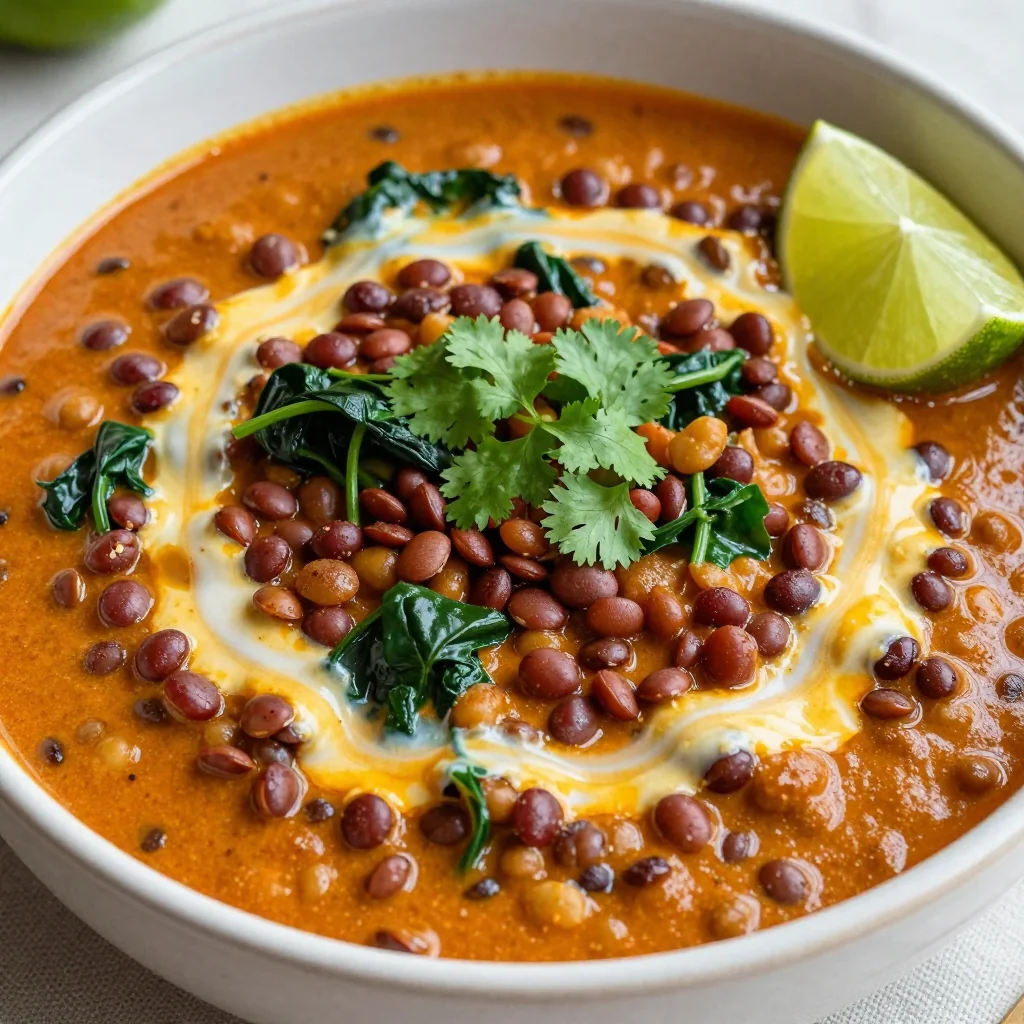
Finishing touches are where the magic truly shines. A splash of lime juice brightens the palate, cutting through the richness and adding a zing that awakens the senses. Fresh cilantro leaves, torn just before serving, provide a herbaceous perfume that ties the whole experience together. A drizzle of extra‑virgin olive oil or a dollop of coconut cream can be added for extra silkiness, but remember – less is more when you’re already working with creamy coconut milk.
Everything's prepped? Good. Let’s get into the real action…

The Method — Step by Step
Heat two tablespoons of oil in a large, heavy‑bottomed pot over medium heat. Once the oil shimmers, add the chopped onion and sauté for 5‑7 minutes, stirring occasionally, until the edges turn a deep golden brown and the kitchen smells like a Parisian bistro. That sizzle when it hits the pan? Absolute perfection. If the onions start to brown too quickly, lower the heat – you want them to caramelize, not burn.
Stir in the minced garlic and grated ginger, cooking for another 30 seconds until fragrant. This is the moment of truth – the aromatics should release a sharp, inviting scent that makes you want to lick the spoon.
Kitchen Hack: If you’re short on time, grate the ginger directly into the pot using a micro‑plane; it will melt into the oil instantly.Now add the whole spices – 1 tablespoon curry powder, 1 teaspoon ground cumin, 1 teaspoon ground coriander, ½ teaspoon turmeric, and a pinch of chili flakes if you like heat. Toast them for 1‑2 minutes, stirring constantly, until they become fragrant and the pot fills with a warm, earthy perfume.
Watch Out: Be careful not to let the spices burn; burnt spices taste bitter and can ruin the entire dish.Introduce the tomato paste, stirring it into the spice mixture until it darkens slightly and melds with the aromatics. This step adds depth and a subtle tang that balances the sweetness of the squash later on. Let it cook for about a minute, allowing the raw tomato flavor to evaporate.
Pour in the coconut milk and vegetable broth, scraping the bottom of the pot to release any caramelized bits stuck to the surface. Bring the mixture to a gentle boil, then reduce to a simmer. The broth should bubble softly, not roar – a gentle simmer ensures the lentils cook evenly without breaking apart.
Add the rinsed red lentils, diced kabocha squash, and a generous pinch of salt. Stir everything together, making sure the lentils are fully submerged. Cover the pot and let it simmer for 20‑25 minutes, stirring occasionally to prevent sticking. The lentils will swell, the squash will become tender, and the sauce will thicken to a luscious, velvety consistency.
Check the texture: the kabocha should be fork‑tender, and the lentils should have softened but still hold their shape. If the curry looks too thick, add a splash of water or extra broth; if it’s too thin, uncover and let it reduce for a few more minutes. Taste and adjust seasoning with more salt, pepper, or a squeeze of lime juice for brightness.
Turn off the heat and stir in the fresh cilantro leaves, letting their aroma bloom in the residual heat. Let the curry rest for 5 minutes – this short rest allows the flavors to meld fully. Serve hot, garnished with an extra drizzle of coconut milk or a sprinkle of chili flakes if you like a final kick.
That's it — you did it. But hold on, I've got a few more tricks that'll take this to another level...
Insider Tricks for Flawless Results
The Temperature Rule Nobody Follows
Never blast the curry on high heat. Starting low and gradually increasing allows the spices to release their essential oils without scorching. I once turned the burner up to high, and the bottom of the pot burned, leaving a bitter aftertaste that no amount of seasoning could fix. Keep the flame steady, and you’ll get a smooth, even flavor development.
Why Your Nose Knows Best
Before you add the final splash of lime, give your nose a quick sniff. If you detect a faint metallic or burnt note, it’s a sign the spices have been over‑cooked. In that case, add a teaspoon of sugar or a splash more coconut milk to balance the bitterness. Trusting your senses beats any recipe rulebook.
The 5‑Minute Rest That Changes Everything
After cooking, let the curry sit, covered, for five minutes. This short rest lets the starches from the lentils and squash fully absorb the broth, creating a creamier texture. I used to serve it straight away and missed out on that silky mouthfeel. It’s a tiny step that makes a massive difference.
Spice Freshness Test
Before you even open the pantry, give each spice a quick crush between your fingers. If it releases a strong aroma, it’s fresh; if it smells muted, it’s time to replace it. Fresh spices are the secret weapon behind a vibrant, aromatic curry.
Salt Timing Mastery
Add a pinch of salt at the beginning of cooking to help the onions release moisture, then finish with a final adjustment after the curry has simmered. This layered salting prevents the dish from becoming overly salty and ensures each component is seasoned perfectly.
Creative Twists and Variations
This recipe is a playground. Here are some of my favorite ways to switch things up:
Spicy Thai Fusion
Swap the curry powder for a tablespoon of Thai red curry paste, add a handful of sliced bamboo shoots, and finish with fresh Thai basil. The result is a bright, fiery twist that transports you straight to a Bangkok night market.
Smoky Chipotle Kick
Replace chili flakes with a teaspoon of chipotle in adobo sauce and add a smoked paprika sprinkle. The smoky undertones complement the sweetness of the kabocha, creating a depth reminiscent of a campfire dinner.
Protein‑Packed Power Bowl
Throw in a cup of cooked chickpeas or diced tofu after the lentils have softened. This adds extra protein and a different texture, turning the curry into a hearty, filling bowl perfect for meal‑prepping.
Creamy Cashew Version
Blend a quarter cup of soaked cashews into the coconut milk before adding it to the pot. The cashews add a nutty richness that makes the sauce even more luxurious, ideal for those who love extra creaminess.
Autumn Harvest Mix
Add diced carrots, sweet potatoes, or even a handful of kale in the last ten minutes of cooking. The additional vegetables bring new colors, flavors, and nutrients, making the dish a true celebration of the season.
Storing and Bringing It Back to Life
Fridge Storage
Transfer any leftovers to an airtight container and store in the refrigerator for up to four days. The flavors continue to meld, so the curry often tastes even better on day two. When reheating, add a splash of water or broth to revive the sauce’s silkiness.
Freezer Friendly
This curry freezes beautifully. Portion it into freezer‑safe bags or containers, leaving a little headroom for expansion, and store for up to three months. Thaw overnight in the fridge, then reheat gently on the stovetop, stirring in a tablespoon of coconut milk to restore its creamy texture.
Best Reheating Method
Reheat over low to medium heat, stirring frequently to prevent sticking. If the curry looks dry, drizzle in a teaspoon of water per serving and cover the pot for a minute to create steam. This technique brings the dish back to its original velvety consistency without overcooking the lentils.