Remember that night when the kitchen turned into a slapstick stage and the tomato sauce I tried to whip up ended up splattering like a rogue firecracker? I was juggling a pot of boiling water, a handful of ripe tomatoes, and a stubborn pan that refused to stay put. The result? A soggy, unappetizing mess that left my friends laughing and my taste buds begging for mercy. That disaster was the spark that lit my curiosity about the humble Andalusian classic that would become my culinary salvation: Salmorejo Andaluz.
The first time I tasted a real Salmorejo, the kitchen filled with a scent so sweetly tangy it felt like a warm hug from the sun-drenched streets of Seville. The thick, tomato‑rich broth glistened like a glossy red velvet, the olive oil drizzled in ribbons that seemed to dance on the surface. The crunch of toasted bread crumbs and the sharp bite of sherry vinegar cut through the sweetness, leaving a lingering warmth that settled in the back of your throat. My mouth felt the texture shift from silky to slightly chunky, and I could taste the subtle hint of garlic without it overpowering the tomato’s natural sweetness. The moment the first spoonful hit my tongue, I realized I’d stumbled upon a dish that marries simplicity with depth in a way that feels both comforting and adventurous.
What makes this version stand out is not just the authenticity of the ingredients, but the deliberate choices that elevate the dish to something you’ll want to revisit again and again. I’ve trimmed the recipe down to its essential elements, eliminated the unnecessary clutter, and introduced a few playful twists that keep it fresh. This isn’t your textbook Salmorejo; it’s a version that respects tradition while inviting a modern palate to explore new textures and flavors. I dare you to taste this and not go back for seconds—because the first bite will set a new benchmark for what a cold tomato soup can be.
By the end of this guide, you’ll have a step‑by‑step playbook that turns a simple bowl of tomato into an unforgettable experience. Let me walk you through every single step—by the end, you'll wonder how you ever made it any other way.
What Makes This Version Stand Out
- Authenticity: Every ingredient is sourced from its regional roots—ripe San Marzano tomatoes, crusty day‑old bread, and a splash of Spanish sherry vinegar—ensuring an unmistakably Andalusian flavor profile.
- Texture: The blend of pureed tomatoes with soaked bread creates a silky consistency that clings to the palate, while the occasional crunchy crumb adds a delightful contrast.
- Simplicity: With fewer than a dozen items, this recipe can be whipped up in a flash, making it the perfect go‑to for busy evenings without sacrificing taste.
- Versatility: The base can be dressed up or down—swap the sherry vinegar for a splash of lemon or add a pinch of smoked paprika for a subtle kick—making it suitable for any occasion.
- Make‑ahead Potential: The entire dish can be prepared up to 24 hours in advance, allowing flavors to meld and giving you more time to enjoy the company.
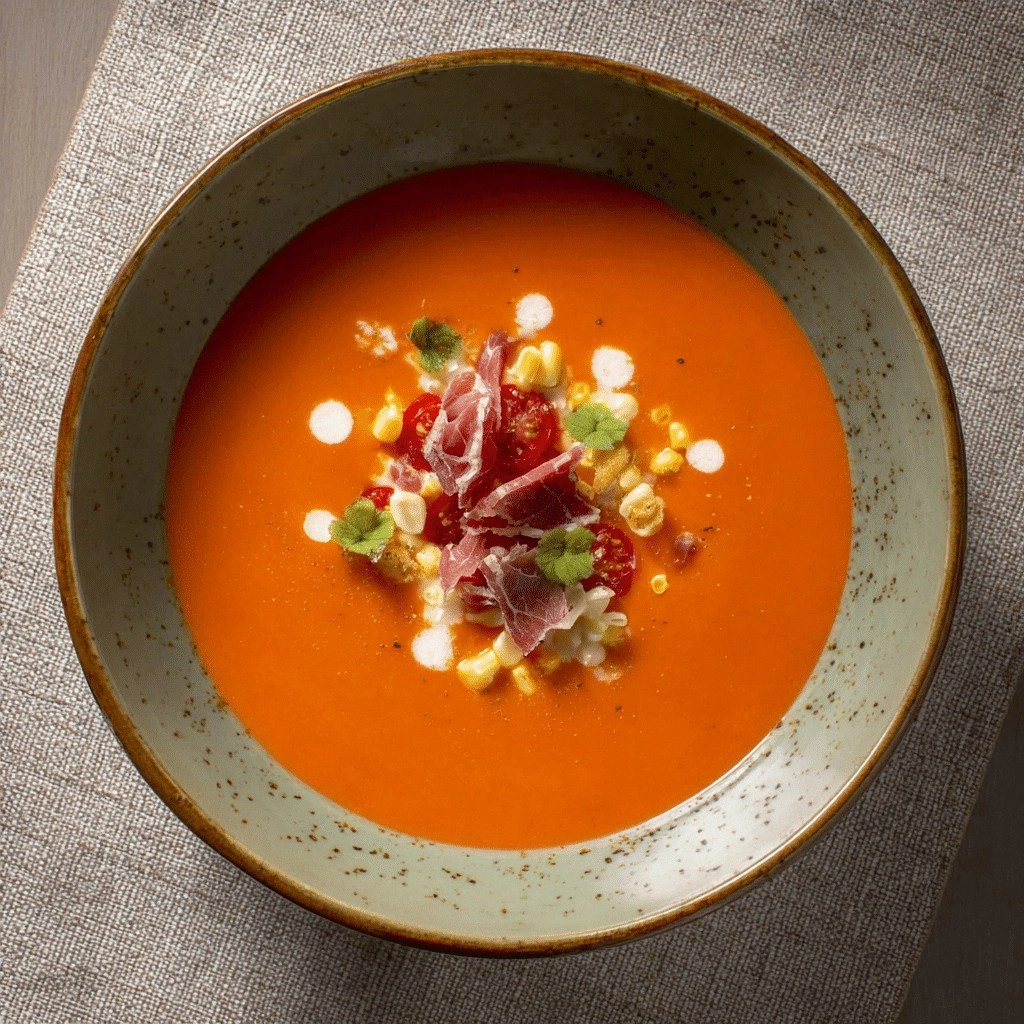
- Visual Appeal: The glossy red surface, accented by a drizzle of olive oil and a sprinkle of pepper, makes it as pleasing to the eye as it is to the tongue.
- Health‑Friendly: Packed with lycopene, vitamin C, and healthy fats from olive oil, it’s a nourishing choice that doesn’t compromise on flavor.
Inside the Ingredient List
The Flavor Base
At the heart of Salmorejo is the tomato—ripe, sweet, and bursting with natural juices. When you choose tomatoes that have a deep crimson hue and a fragrant aroma, you’re already setting the stage for a dish that feels like a warm hug. These tomatoes should be soft enough to bruise under a fork but firm enough to maintain their shape during blending. If you’re in a pinch, canned San Marzano tomatoes can substitute, but fresh is always preferable for that unmistakable garden freshness.
The Texture Crew
The bread is the unsung hero that transforms the sauce from a thin puree into a luscious, slightly thickened soup. Use day‑old crusty bread, torn into bite‑sized pieces, so it soaks up the liquid without falling apart. The bread provides body, a subtle nuttiness, and a comforting, almost nostalgic, chew. If you’re a gluten‑free enthusiast, try a gluten‑free bread loaf; just ensure it’s sturdy enough to absorb the tomato mixture.
The Unexpected Star
Olive oil is not just a dressing; it’s the liquid gold that ties all the flavors together. A generous splash of extra‑virgin olive oil adds a silky finish and a subtle peppery bite that lingers on the tongue. Choose a cold‑pressed, fruity olive oil to bring out the nuanced flavors without overpowering the delicate tomato notes. The oil also contributes healthy monounsaturated fats, making the dish heart‑friendly.
The Final Flourish
Garlic and vinegar are the dynamic duo that injects brightness and depth. Two cloves of garlic, minced finely, release a mellow, sweet aroma that complements the tomato’s acidity. A tablespoon of sherry vinegar adds a slight tang that cuts through the richness, while a pinch of black pepper brings a gentle heat. These finishing touches are crucial; without them, the dish would feel flat and uninspired.
Everything’s prepped? Good. Let’s get into the real action…
The Method — Step by Step
- Wash the tomatoes under cold running water, then pat them dry with a clean towel. Slice the tomatoes in half and remove the seeds with a spoon, creating a smooth, seed‑free base that will blend effortlessly. This step is crucial because the seeds can introduce unwanted bitterness and a watery texture.
- Tear the day‑old bread into small, uniform pieces and place them in a bowl. Pour a splash of cold water over the bread, letting it soak for about 10 minutes until it’s soft but not mushy. The bread’s absorption power will help thicken the sauce without adding gluten overload.
- In a high‑speed blender, combine the peeled tomatoes, soaked bread, minced garlic, and a tablespoon of sherry vinegar. Pulse until the mixture reaches a smooth, velvety consistency, then add the olive oil in a slow, steady stream while blending. This technique ensures the oil emulsifies properly, creating a glossy, silky texture that coats the spoon.
- Season the mixture with 1 teaspoon of salt and 1 teaspoon of freshly ground black pepper. Taste and adjust—if you need more brightness, add a splash of vinegar; if you want richer flavor, drizzle a bit more olive oil. The seasoning should be balanced, not overpowering.
- Transfer the blended sauce to a shallow dish or bowl, cover with plastic wrap, and refrigerate for at least 2 hours, preferably overnight. Chilling allows the flavors to meld and the sauce to thicken slightly, creating a more cohesive mouthfeel.
- Just before serving, whisk the chilled sauce with a fork to ensure a smooth, uniform consistency. This final whisk redistributes any settled oil and guarantees that each spoonful is silky.
- Serve the Salmorejo in chilled bowls or glasses. Drizzle a generous swirl of extra‑virgin olive oil over the top, then sprinkle with freshly ground black pepper. Garnish with sliced hard‑boiled eggs, diced jamón serrano, or a few fresh basil leaves for an aromatic finish.
- Enjoy immediately, or let it sit in the fridge for up to 48 hours. The sauce’s texture will remain firm, and the flavors will deepen, making it a versatile option for lunch or a light dinner.
That’s it—you did it. But hold on, I’ve got a few more tricks that will take this to another level…
Insider Tricks for Flawless Results
The Temperature Rule Nobody Follows
While the sauce is meant to be served cold, the initial blending should happen at room temperature to ensure the oil emulsifies correctly. If the mixture is too cold, the oil will separate, resulting in a greasy texture. Letting the ingredients sit for a few minutes before blending gives the olive oil a chance to integrate fully.
Why Your Nose Knows Best
Smell the sauce before you season it. A faint, sweet aroma indicates ripe tomatoes, while a sharp, acidic scent signals that you might need more vinegar. Trusting your nose can help you balance the flavors without over‑seasoning.
The 5‑Minute Rest That Changes Everything
After blending, let the sauce rest in the refrigerator for a minimum of 5 minutes before whisking again. This brief pause allows the flavors to settle, giving you a smoother, more cohesive final product.
Don’t Rush the Bread Soak
Some cooks skip the bread soak, but this step is vital for achieving the right thickness. If the bread is too dry, the sauce will be watery; if it’s too soggy, it will become mushy. Aim for bread that’s soft but still holds its shape.
The Secret to a Luscious Olive Oil Finish
When drizzling olive oil over the top, do it in a slow, steady stream while swirling the bowl. This creates a beautiful, swirling pattern that enhances the visual appeal and ensures each bite gets a burst of flavor.
Garnish Timing Is Key
Place the egg slices and jamón on the plate just before serving. This prevents the eggs from releasing moisture into the sauce, keeping the texture crisp and the presentation pristine.
Creative Twists and Variations
This recipe is a playground. Here are some of my favorite ways to switch things up:
Smoky Chipotle Salmorejo
Swap the sherry vinegar for a splash of chipotle‑infused vinegar and add a pinch of smoked paprika to the blend. The smoky undertone pairs wonderfully with the sweet tomato, creating a flavor profile that feels like a summer BBQ on a plate.
Herb‑Infused Verde
Introduce a handful of fresh cilantro or parsley into the blend for a green, herbaceous twist. This variation brightens the dish and adds a refreshing contrast to the rich tomato base.
Vegan Delight
Replace the hard‑boiled eggs with a few slices of avocado for a creamy, dairy‑free garnish. Avocado’s subtle flavor and silky texture complement the tomato’s acidity perfectly.
Seafood Salmorejo
Top the sauce with fresh shrimp or scallops that have been quickly seared. The briny sweetness of the seafood adds a luxurious dimension that feels like a seaside feast.
Breakfast Edition
Serve the Salmorejo over toasted sourdough, then drizzle with a little honey and sprinkle crushed red pepper flakes. It becomes a breakfast‑style dish that’s both comforting and invigorating.
Low‑Carb Salmorejo
Omit the bread entirely and replace it with a handful of roasted cauliflower florets. This gives the sauce a lighter body while still delivering a satisfying texture.
Storing and Bringing It Back to Life
Fridge Storage
Store the chilled sauce in an airtight container in the refrigerator for up to 48 hours. The cool environment helps preserve the freshness of the tomatoes and keeps the olive oil from oxidizing.
Freezer Friendly
For longer storage, portion the sauce into freezer‑safe containers and freeze for up to 3 months. When ready to use, thaw overnight in the fridge and give it a good whisk to re‑emulsify the oil.
Best Reheating Method
Although Salmorejo is traditionally served cold, you can gently warm it in a saucepan over low heat, stirring constantly, until it’s just warmed through. Add a splash of water to keep it from drying out and to restore its silky consistency.