Picture this: It was a Tuesday night, I was supposed to be meal-prepping chicken like a responsible adult, but all I could think about was the way my favorite Vietnamese restaurant makes their steamed snapper — so fragrant the whole block knows you're eating well. I had ginger, I had limes, I had a beautiful piece of halibut that was whispering "don't you dare pan-sear me like a basic weeknight dinner." So I did what any rational food-obsessed person would do: I ditched the plan, cranked up Stevie Wonder, and decided to figure out the dish on my own. Forty-five minutes later the kitchen smelled like a tropical market at sunrise, my roommate was hovering with fork in hand, and I was grinning like I'd won the flavor lottery. That spontaneous experiment turned into the recipe I'm about to lay on you, and it is, hands down, the best version you'll ever make at home.
Most steamed-fish recipes taste like diet food: polite, quiet, and instantly forgettable. This one belts out high notes of lime zest and ginger heat, balanced by a salty-sweet glaze that clings to the flakes like glossy lacquer on fine pottery. The flesh stays custard-tender because we steam at exactly 200 °F—not a degree higher—so the proteins relax instead of seizing up. A final spoonful of searing scallion oil crackles as it hits the platter, releasing a smoky perfume that makes everyone at the table involuntarily close their eyes and inhale. If you've ever struggled with fish that turns out dry, bland, or smelling like a wharf at low tide, you're not alone—and I've got the fix.
What surprised me most was how forgiving the technique is. You can use cod, sea bass, red snapper, or even sustainably farmed barramundi; the aromatics do the heavy lifting, so the dish still tastes restaurant-level. I've served it to spice-wimps and chili-fiends alike, and both camps mop up every last drop of sauce with rice or crusty bread. Fair warning: I ate half the batch straight from the steamer basket "for quality control," so double the recipe if you actually want leftovers.
Let me walk you through every single step—by the end, you'll wonder how you ever made it any other way.
What Makes This Version Stand Out
- Flavor Bomb: Instead of plain water under the steamer, we bubble a quick broth of lime leaves, smashed ginger, and a glug of white wine, so the fish bathes in aromatics from below and above.
- Texture Nirvana: Flash-steaming keeps the center translucent and silky, while a 30-second scallion-oil finish adds gentle crisp edges—think velvet with sequins.
- Speed Demon: Active cooking time is under 15 minutes, perfect for those "I want take-out but also want pants that button" nights.
- Pantry Friendly: Every ingredient survives happily in fridge or freezer for weeks, so you can whip this up on a whim without a scavenger hunt.
- Guest Impressing: Serve the whole fish on a platter, garnish with edible flowers, and watch your dinner-party reputation ascend to minor celebrity status.
- Meal-Prep Hero: Steam multiple fillets, chill, and flake into salads or rice bowls all week; the flavor actually intensates overnight.
- Health Halo: High lean protein, zero added sugar, and enough zing to make salt shakers feel insecure—your cardiologist and taste buds reach a rare truce.
Alright, let's break down exactly what goes into this masterpiece...
Inside the Ingredient List
The Flavor Base
Ginger is the rock star here; go for a plump hand that feels heavy for its size—wrinkled ones are woody and bitter. Peel with the edge of a spoon (save the peels for tea) and slice paper-thin so it surrenders its oils in seconds. Lime does the high-acid tango; zest before juicing because the zest holds the sparkly essential oils that bottled juice can only dream of. If you skip the lime, the dish collapses into flat saline territory, so don't cheat yourself.
The Texture Crew
Fish first: look for translucent, not opaque, flesh that springs back when poked. If it smells like the ocean, you're golden; if it smells like the pier, back away slowly. A two-centimeter thickness is the sweet spot—thicker and timing gets tricky, thinner and it overcooks while you're still grating ginger. Cornstarch mixed with a few drops of water creates a slurry that thickens the sauce to a glossy sheen without clouding, a trick I borrowed from Hong Kong chefs who prize clarity in their steamed dishes.
The Unexpected Star
Fermented tofu might raise eyebrows, but one cube whisked into the sauce adds umami depth reminiscent of aged cheese. Fish sauce joins the party too—just a teaspoon—bolstering oceanic notes without screaming "I raided a Vietnamese pantry." Together they create a bass line that makes ginger and lime sound like front-row vocals rather than a high-school garage band.
The Final Flourish
Scallion threads and cilantro sprigs go on after the oil pour so they wilt just enough to release grassy perfume without turning army-green and sad. A pinch of Sichuan peppercorns, toasted and cracked, gives gentle tongue-tingle that makes the next bite irresistible. If you've ever struggled with garnishes that feel like an afterthought, this combo will convert you to garnish evangelism.
Everything's prepped? Good. Let's get into the real action...
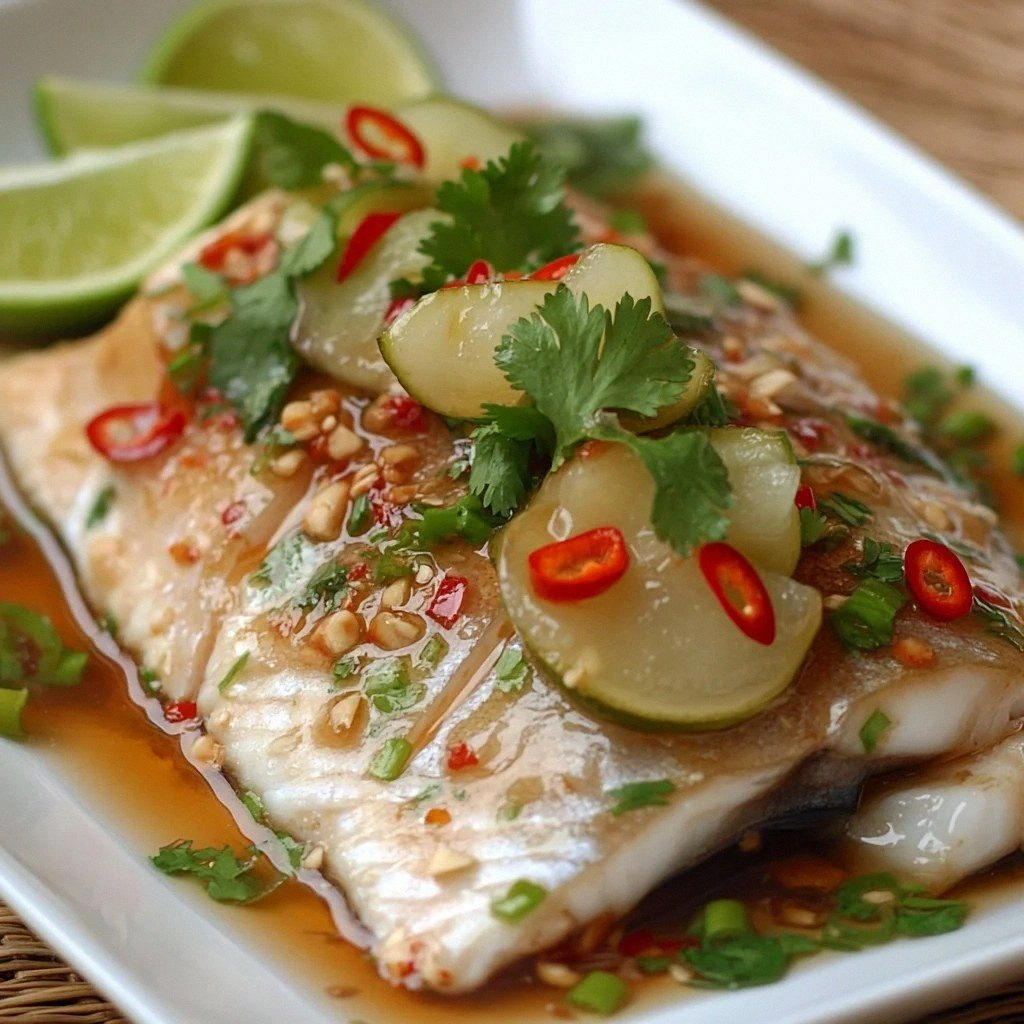
The Method — Step by Step
- Pat the fish very dry—water on the surface creates steam pockets that make flesh rubbery. Lay it skin-side down on a heat-proof plate that fits inside your steamer basket. Season lightly with white pepper; we'll add salt later because salt draws moisture and we want to keep things dewy for now.
- Set a pot or wok with two inches of water over medium heat. Add lime leaves, smashed ginger chunks, and a splash of white wine. Bring to a gentle simmer, not a rolling boil—watch for the surface to tremble like a nervous singer on opening night.
- While the aromatics wake up, whisk together lime juice, a teaspoon of fish sauce, a pinch of sugar, and the fermented tofu cube until silky. This liquid gold will season the fish as it steams, so taste and adjust: it should be bright, salty, and just a touch sweet.
- Scatter half the ginger slices over the fish like you're dealing a card game. Tuck a few slivers underneath too—every bite deserves equal opportunity flavor. Spoon half the lime-tofu mixture over the top; reserve the rest for finishing.
- Place the plate in the steamer, cover with a tight lid, and set a timer for 8 minutes. Resist the urge to peek—lifting the lid drops temperature and extends cooking time. While you wait, the kitchen will fill with a citrus-floral cloud that smells like vacation in a bottle.
- Meanwhile, heat two tablespoons of neutral oil in a small pan until it shimmers but doesn't smoke. Drop in the remaining ginger; it should fizz enthusiastically. After 30 seconds add the scallion threads, kill the heat, and swirl—the oil will carry their flavor and turn a gorgeous emerald.
- At the 8-minute mark, nudge the thickest part of the fish with a spoon; it should flake into clean petals and look almost translucent in the center. If it resists, give it another minute, but remember carry-over cooking happens fast.
- Pull the plate out carefully—steam burns are sneaky. Drizzle the remaining lime-tofu sauce, then pour the hot ginger-scallion oil in a slow zig-zag. Listen for that satisfying hiss as the aromatics bloom. Garnish with cilantro and Sichuan pepper.
That's it—you did it. But hold on, I've got a few more tricks that'll take this to another level...
Insider Tricks for Flawless Results
The Temperature Rule Nobody Follows
Most home cooks crank the burner to high, thinking more heat equals faster cooking. Wrong. A gentle 200 °F environment sets proteins without squeezing out moisture. Slide a cheap oven thermometer into the steamer; once it hits the sweet spot, reduce the flame to maintain. Your fish will emerge so glossy you could check your reflection.
Why Your Nose Knows Best
When lime leaves and ginger enter the hot zone, they release a sweet-camphor aroma. If you smell sharp bitterness, the heat is too high and aromatics are scorching. Adjust immediately, or the sauce will carry a burnt aftertaste no amount of cilantro can hide.
The 5-Minute Rest That Changes Everything
After the oil pour, loosely tent the plate with foil and wait five minutes. This pause allows the seasoning to seep deeper and the surface temperature to mellow, so you don't burn your tongue and miss subtle flavors. A friend tried skipping this step once—let's just say it didn't end well for his impatient palate.
Creative Twists and Variations
This recipe is a playground. Here are some of my favorite ways to switch things up:
Thai Firecracker Version
Swap lime leaves for kaffir lime zest, add a bruised lemongrass stalk to the steaming water, and finish with bird's-eye chilies. The result is hotter, brighter, and perfect with an ice-cold lager.
Miso-Caramel Upgrade
Replace fermented tofu with a tablespoon of white miso and a drizzle of maple syrup. The glaze turns nutty-sweet, reminiscent of miso black cod but ready in half the time.
Coconut Comfort Edition
Substitute half the water with coconut milk in the steamer, and crown the fish with toasted coconut flakes. Creamy, fragrant, and ideal for those who like their seafood to feel like a hug.
Sichuan Pepper Party
Double the peppercorns and add a spoon of chili crisp to the oil pour. Numbing, spicy, and utterly addictive—serve with cold noodles to battle the heat.
Mediterranean Detour
Use lemon zest instead of lime, oregano instead of cilantro, and finish with olives and cherry tomatoes. It's like the fish took a vacation to the Aegean and came back with stories.
Silky Tofu Sidekick
Steam cubes of soft tofu alongside the fish, spooning the sauce over both. Protein on protein may sound excessive, but texturally it's like clouds layered with clouds.
Storing and Bringing It Back to Life
Fridge Storage
Cool the fish completely, transfer to an airtight glass container, and refrigerate up to three days. Layer plastic wrap directly against the surface to prevent that unfortunate fridge-flavor absorption.
Freezer Friendly
Flake leftover fish, mix with a spoon of the sauce, and freeze in silicone muffin cups. Once solid, pop them out and store in a zip bag for up to two months. They thaw in minutes and upgrade instant ramen like a culinary mic drop.
Best Reheating Method
Add a tiny splash of water to a covered skillet, bring to a gentle steam, and warm the fish for two minutes. Microwaves murder texture; this method keeps it plush. Alternatively, serve it cold over salad—reheating is sometimes overrated.