I was standing in my kitchen on a rainy Tuesday, staring at a half‑empty pantry and a sudden, insistent craving for something that felt like a hug from the Mediterranean. My first instinct was to pull out a frozen lasagna, but the thought of soggy noodles and a bland sauce made my stomach protest. Then, out of nowhere, my roommate dared me: “Make a moussaka that could convince a Greek grandma you’re her long‑lost son.” I laughed, but the challenge lit a fire under me that no ordinary recipe could tame.
The air in my apartment filled with the earthy perfume of onions sizzling in olive oil, the sweet tang of tomatoes bubbling, and the heady whisper of cinnamon and cloves that seemed to travel straight from a sun‑kissed Aegean village. I could hear the faint crackle of the oven preheating, feel the weight of the heavy cast‑iron pan against my palm, and taste the promise of creamy béchamel that would soon cascade over layers of golden potatoes and glossy eggplant. Every sense was on high alert, as if the kitchen itself were holding its breath, waiting for the magic to happen.
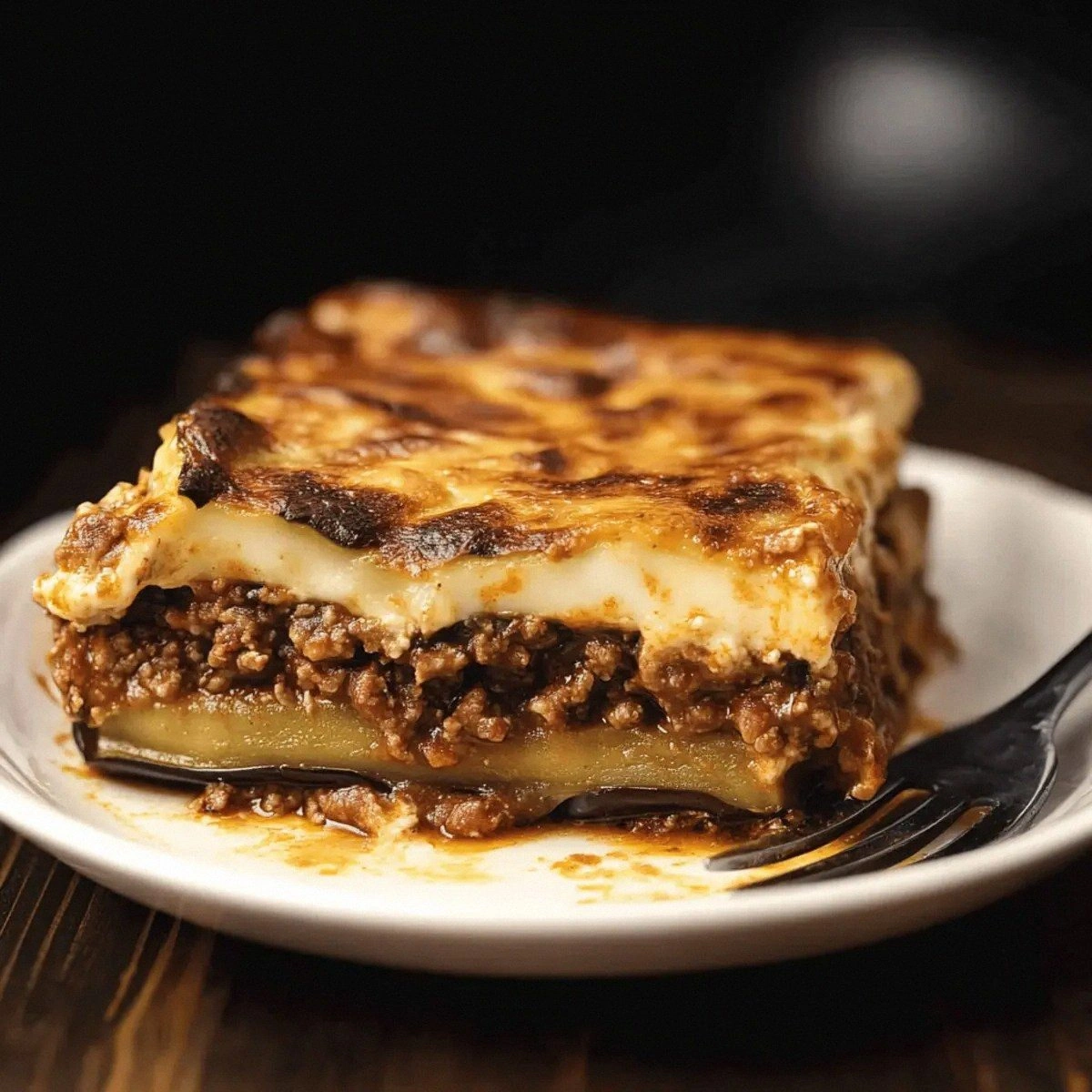
Most moussaka recipes I've tried either left the sauce watery, the vegetables soggy, or the cheese topping flat and uninspired. This version, however, is a game‑changer: the potatoes are sliced thin enough to crisp at the edges, the eggplant gets a quick fry that locks in moisture, and the béchamel is enriched with Kasseri and Kefalotyri for a melt‑in‑your‑mouth richness that makes the whole dish sing. I’m daring you to taste this and not go back for seconds – that’s how confident I am.
There’s one secret I’m saving for the end – a splash of milk infused with a pinch of nutmeg that turns the béchamel from good to legendary. I’ll reveal it when we get to the assembly, but trust me, it’s the kind of detail that makes you feel like you’ve stumbled onto a family secret. Let me walk you through every single step — by the end, you’ll wonder how you ever made it any other way.
What Makes This Version Stand Out
- Layered Crunch: Thin‑sliced potatoes turn golden at the edges, giving every bite a satisfying snap that contrasts with the silky sauce.
- Spice Symphony: A blend of cloves, allspice, and a hint of cinnamon creates a warm, aromatic backbone that feels like a Mediterranean lullaby.
- Cheese Elevation: Using both Kasseri and Kefalotyri adds a nutty depth and a beautiful melt that ordinary mozzarella could never achieve.
- Simple Prep, Stellar Results: No fancy equipment needed – just a good skillet, a baking dish, and a bit of patience.
- Make‑Ahead Friendly: Assemble the night before, refrigerate, and bake fresh in the morning – perfect for busy weekdays.
- Crowd‑Pleaser: Even the pickiest eaters fall in love with the creamy texture and comforting flavors.
- Ingredient Integrity: Fresh, high‑quality vegetables and real Greek cheeses keep the dish authentic and vibrant.
- Versatile Base: The sauce can be swapped for a vegetarian lentil version, making it adaptable to any diet.
Inside the Ingredient List
The Flavor Base
Olive oil is the silent hero here, providing a fruity foundation that carries the aromatics without overwhelming them. The 100 g of finely diced onion releases a sweet caramel note once it hits the pan, creating a depth that pure garlic could never match. Ground beef, at a hearty 500 g, supplies the protein backbone; its fat content ensures the sauce stays luscious, and if you swap it for lamb, you’ll get an even richer, more traditional Greek profile.
The spice trio – 0.5 tsp ground cloves, 1 tsp ground allspice, and a small cinnamon stick – is where the magic truly begins. These warm spices echo the flavors of a Greek souvlaki grill, adding a subtle heat that awakens the palate. If you ever skip them, expect a flat, one‑dimensional sauce that lacks that comforting depth.
The Texture Crew
Tomato paste (3 tsp) is the umami anchor, thickening the sauce and delivering that deep, roasted tomato punch. Diced tomatoes (200 g) and tomato sauce (250 g) add moisture and a bright acidity that balances the richness of the meat. A single bay leaf lends a subtle herbal note that rounds out the sauce without stealing the spotlight.
Ground breadcrumbs (1.5 tbsp) act as a gentle thickener, absorbing excess liquid and ensuring each layer stays firm after baking. Potatoes (900 g), eggplants (700 g), and zucchini (450 g) form the structural backbone; each vegetable brings its own texture – the potatoes crisp, the eggplant silky, and the zucchini tender. If you’re short on zucchini, you can replace it with thinly sliced carrots for a slightly sweeter bite.
The Unexpected Star
Vegetable oil is reserved for the quick fry of the eggplant and zucchini, giving them that golden crust without soaking them in olive oil’s flavor. Butter (100 g) and all‑purpose flour (80 g) combine to create a roux, the first step in building a velvety béchamel that will coat the entire dish like a silk blanket. Milk (1 liter) is the liquid component, and when it meets the roux, it transforms into a sauce that’s both light and indulgent.
A pinch of ground nutmeg (0.25 tsp) adds an aromatic whisper that elevates the béchamel from ordinary to extraordinary. Kasseri (70 g) and Kefalotyri (3 tbsp) are the cheese duo that creates a golden, slightly salty crust; Kefalotyri, being harder, melts into a crisp top, while Kasseri stays creamy inside. If you can’t find Kefalotyri, substitute with grated Pecorino Romano for a similar sharpness.
The Final Flourish
Three eggs bind the béchamel and cheese together, ensuring the topping sets beautifully once it cools. Salt and pepper, though listed without a precise measure, are essential for seasoning every layer; never skimp on them, because they bring out the hidden flavors of the spices and vegetables. The final sprinkle of extra cheese before baking creates that irresistible, bubbling crust that makes you stare at the oven like a kid at a fireworks show.
Everything's prepped? Good. Let's get into the real action...
The Method — Step by Step
Preheat your oven to 180 °C (350 °F). While the oven warms, slice the potatoes into ¼‑inch rounds, then lay them on a baking sheet, drizzle with a touch of olive oil, and toss gently. Roast for about 15 minutes until they’re just starting to turn golden at the edges – you’ll hear a faint sizzle that tells you they’re on the right track. Let them cool while you move on to the next stage.
Heat a generous splash of vegetable oil in a large skillet over medium‑high heat. Slice the eggplant and zucchini into ½‑inch rounds; pat them dry with paper towels to avoid excess splatter. Fry each slice for 2‑3 minutes per side until they develop a beautiful caramel color. This quick fry locks in moisture and prevents the vegetables from becoming mushy later.
Kitchen Hack: Sprinkle a pinch of salt on the eggplant slices and let them sit for 10 minutes; this draws out bitterness and reduces oil absorption.In the same skillet, add 3 tbsp olive oil and sauté the diced onion until translucent, about 4 minutes. Crumble in the ground beef, breaking it up with a wooden spoon, and brown it until the juices evaporate and the meat develops a deep, caramelized color. Stir in the tomato paste, diced tomatoes, tomato sauce, bay leaf, ground breadcrumbs, cloves, allspice, and the cinnamon stick. Let the mixture simmer gently for 15 minutes, stirring occasionally, until it thickens and the flavors meld into a robust, aromatic sauce.
While the sauce simmers, melt the butter in a saucepan over medium heat. Whisk in the flour, creating a smooth roux; cook for 2‑3 minutes until it turns a light golden hue – this is the foundation of your béchamel. Gradually pour in the milk, whisking constantly to avoid lumps. As the sauce thickens, add the nutmeg, a pinch of salt, and pepper. Once it reaches a velvety consistency, remove from heat and let it cool slightly before whisking in the eggs one at a time.
- Watch Out: When adding the milk to the roux, pour it in a thin stream while whisking vigorously; pouring too quickly creates lumps that are impossible to smooth out later.
Now, combine the béchamel with the grated Kasseri and Kefalotyri cheeses, stirring until the mixture is uniformly creamy and the cheese has melted. This cheese‑enriched béchamel is the secret weapon that gives the topping its golden, glossy finish.
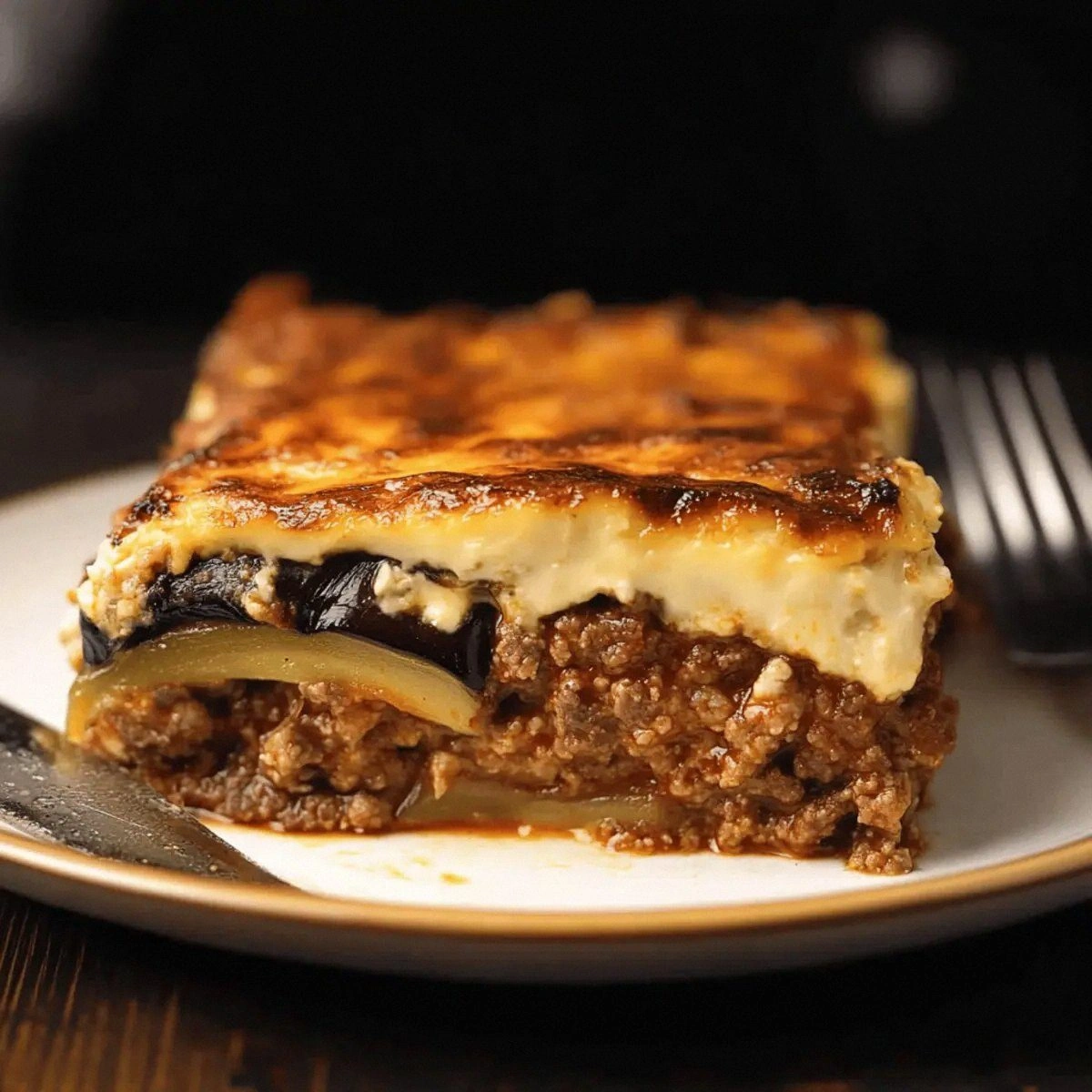
Time to assemble! In a greased 9×13‑inch baking dish, lay down a thin layer of the roasted potatoes, followed by half of the meat sauce, then a layer of fried eggplant and zucchini. Repeat with the remaining potatoes, sauce, and vegetables, ending with a final layer of potatoes on top. This stacking order ensures every bite gets a bit of everything – a true symphony of textures.
Pour the cheese‑laden béchamel over the top, spreading it evenly with a spatula. Sprinkle an extra handful of Kefalotyri on the surface for that crunchy, caramelized crust.
Kitchen Hack: Use the back of a spoon to create gentle peaks in the béchamel; these peaks will turn into delightful, crispy “mountains” as the moussaka bakes.Slide the dish into the preheated oven and bake for 35‑40 minutes, or until the top is a deep, buttery gold and the edges are bubbling enthusiastically. Halfway through, rotate the dish to ensure even browning – this little trick prevents one side from getting a soggy finish.
Remove the moussaka from the oven and let it rest for at least 15 minutes before cutting. This resting period allows the layers to set, making slicing clean and preventing the sauce from spilling everywhere. Picture yourself pulling this out of the oven, the whole kitchen smelling incredible, and the first forkful sliding off the plate with a perfect, creamy bite. That's it — you did it. But hold on, I've got a few more tricks that'll take this to another level...
Insider Tricks for Flawless Results
The Temperature Rule Nobody Follows
Never bake a moussaka straight from the fridge at a high temperature; the sudden heat shock can cause the sauce to separate. Instead, let the assembled dish sit at room temperature for 10‑15 minutes before it hits the oven. This gentle transition ensures the béchamel stays smooth and the vegetables retain their shape. I once tried skipping this step, and the result was a watery mess that clung to the pan like a stubborn stain.
Why Your Nose Knows Best
When the meat sauce starts to simmer, trust the aroma more than the timer. A fragrant, slightly sweet scent indicates the tomatoes have broken down and the spices have melded perfectly. If you smell a raw, acidic bite, keep simmering a few more minutes. Your nose is a built‑in kitchen gauge – listen to it, and you’ll avoid a bland sauce every time.
The 5‑Minute Rest That Changes Everything
After baking, resist the urge to dive in immediately. Letting the moussaka rest for five minutes (or even fifteen, if you can wait) allows the layers to firm up, making each slice look restaurant‑ready. This short pause also lets the flavors settle, turning a good dish into a great one. I’ve seen impatient cooks cut in too early and end up with a sloppy plate – don’t be that person.
Eggplant’s Secret Moisture Shield
Before frying, lightly dust the eggplant slices with a thin layer of flour mixed with a pinch of salt. This creates a barrier that locks in moisture while still achieving a crisp exterior. The result is eggplant that’s tender inside, with a satisfying bite on the outside – a texture that many recipes miss entirely.
Cheese Timing is Everything
Creative Twists and Variations
This recipe is a playground. Here are some of my favorite ways to switch things up:
Mediterranean Veggie Dream
Replace the ground beef with a mix of lentils and finely chopped mushrooms. The earthy lentils mimic the meat’s texture, while mushrooms add umami depth. Top with a sprinkle of feta for a tangy finish that brightens the dish.
Spicy Saffron Surprise
Add a pinch of saffron threads soaked in warm milk to the béchamel, and stir in a chopped red chili into the meat sauce. The saffron imparts a subtle floral note, while the chili gives a gentle heat that wakes up the palate.
Cheesy Four‑Cheese Fusion
Mix in grated Gruyère and sharp cheddar alongside the Kasseri and Kefalotyri. This blend creates a richer, more complex cheese crust that’s perfect for cheese lovers who can’t get enough.
Herb‑Infused Layers
Stir fresh chopped oregano, thyme, and mint into the meat sauce just before simmering. The herbs add a bright, garden‑fresh contrast to the deep spices, making the dish feel lighter.
Mini Moussaka Cups
Instead of a large baking dish, use muffin tins to create individual servings. This is ideal for parties or meal prep, and the edges get extra crispy, turning each bite into a handheld delight.
Storing and Bringing It Back to Life
Fridge Storage
Allow the cooled moussaka to sit in an airtight container for up to 4 days. When reheating, cover the dish with foil and warm in a 160 °C (325 °F) oven for 20 minutes, then uncover for the last 5 minutes to revive the crust.
Freezer Friendly
Portion the fully assembled, unbaked moussaka into freezer‑safe trays, wrap tightly, and freeze for up to 3 months. To bake from frozen, add an extra 15 minutes to the baking time and keep the temperature at 180 °C (350 °F) throughout.
Best Reheating Method
For a quick microwave fix, slice a portion and heat on high for 2‑3 minutes, then finish under a broiler for 1‑2 minutes to restore the crispy top. Adding a tiny splash of milk before reheating creates steam that revives the béchamel’s silkiness without drying it out.