I was halfway through a weekend of culinary experiments, and the kitchen was a battlefield of pots, pans, and an unexpected aroma that made my eyes water. A friend had dared me to recreate a forgotten British classic—meat pie in jelly—while we were stuck inside during a sudden storm. I laughed, grabbed a recipe from a dusty cookbook, and thought, “Sure, let’s see how this goes.” The result? A dish that melts in your mouth, with a glossy gelatinous coating that feels like a secret handshake between tradition and modern flair. That first bite was a revelation: the savory meat, the buttery crust, and the subtle hint of nutmeg all wrapped in a translucent, almost ceremonial glaze. If you’ve ever tried a pie that just didn’t hit the mark, this one will make you question every other pie you’ve made. I dare you to taste this and not go back for seconds.
Picture yourself pulling this out of the oven, the whole kitchen smelling incredible, the steam rising like a gentle mist. The crust crackles, the filling swirls with a glossy sheen, and the first slice reveals a golden, savory core that promises more with every bite. The texture is a perfect dance of flaky pastry and succulent meat, while the gelatin coating adds a playful, almost carnival-like finish. The moment the first spoonful hits your tongue, you’ll feel the depth of the spices, the richness of the pork, and the comforting familiarity of a home‑cooked meal. This isn’t just a pie; it’s a culinary passport to a hidden corner of British comfort food, reimagined with a modern twist.
What sets this version apart from the countless variations you’ll find online? First, the use of pork belly and streaky bacon gives the filling a depth of flavor that’s almost impossible to replicate with lean meats alone. Second, the gelatin leaves—whether pig’s trotters or modern gelatin sheets—create a glossy, almost jewel‑like glaze that’s both visually striking and tastefully subtle. Third, the spice blend of nutmeg, sage, and mace gives the pie a warm, aromatic profile that feels both earthy and slightly exotic. Finally, the method of preparing the pastry—combining lard, butter, and flour—creates a crust that is flaky yet tender, with a buttery bite that melts in your mouth. I’ll be honest: I ate half the batch before anyone else got to try it.
Most recipes get this completely wrong. They either undercook the meat, overcook the pastry, or forget the gelatin, resulting in a pie that is either dry or soggy. Here’s what actually works: a slow, low‑heat bake that allows the meat to render its own fat, a resting period for the pastry to set, and a final glaze that sets just enough to keep the pie from falling apart. The result is a dish that not only satisfies the palate but also looks like it belongs on a high‑end menu. I’m going to walk you through every single step—by the end, you’ll wonder how you ever made it any other way.
What Makes This Version Stand Out
- Flavor: The blend of pork shoulder, belly, and bacon creates a layered, savory experience that lingers on the tongue. The subtle warmth from nutmeg, sage, and mace elevates the dish beyond ordinary comfort food.
- Texture: A flaky pastry that remains tender after baking, paired with a silky gelatin glaze that adds a playful, almost celebratory finish.
- Simplicity: Despite the impressive outcome, the method is straightforward and approachable for home cooks.
- Uniqueness: The gelatin coating is a nod to classic British game pies but with a modern twist that keeps it fresh and engaging.
- Crowd Reaction: Guests often ask for the recipe after the first bite; the dish is a conversation starter and a showstopper.
- Ingredient Quality: Using fresh, high‑quality pork and a good butter gives the dish a depth that you can’t achieve with lower‑grade substitutes.
- Cooking Method: Slow, low‑heat cooking allows the meats to break down gently, while the gelatin sets the filling into a silky finish.
- Make‑Ahead Potential: The pie can be assembled ahead of time, refrigerated, and baked later, making it perfect for gatherings.
Alright, let’s break down exactly what goes into this masterpiece…
Inside the Ingredient List
The Flavor Base
The meat trio—pork shoulder, pork belly, and streaky bacon—forms the heart of this pie. Each brings a distinct flavor profile: the shoulder offers a mild, hearty taste; the belly adds richness and a subtle sweetness; and the bacon contributes a smoky, salty edge. If you skip any one of these, the overall depth diminishes noticeably. For a leaner version, you could substitute pork shoulder with chicken thighs, but the taste will shift toward a lighter profile.
The Texture Crew
The pastry is a marriage of plain flour, lard, and butter, combined with a small amount of cold water. Lard gives the crust a flaky, melt‑in‑your‑mouth quality, while butter adds a rich, buttery flavor. If you’re looking for a vegetarian twist, replace lard with a high‑quality vegetable shortening, but be aware that the texture will be slightly less flaky.
The Unexpected Star
Gelatin leaves or pig’s trotters might sound odd, but they’re the secret to that glossy, jewel‑like glaze. The gelatin coats the filling, sealing in moisture and giving the pie a striking shine. If you’re vegan or allergic to gelatin, use agar‑agar sheets instead. The result will be slightly firmer, but the visual appeal remains impressive.
The Final Flourish
Spices—ground nutmeg, dried sage, mace, bay leaves, and peppercorns—infuse the filling with warmth and depth. The nutmeg brings a subtle sweetness, sage adds an earthy note, and mace offers a hint of citrusy brightness. The bay leaves and peppercorns contribute aromatics that complement the pork’s natural flavors. If you’re a spice lover, feel free to add a pinch of cayenne for a mild kick.
Everything’s prepped? Good. Let’s get into the real action…
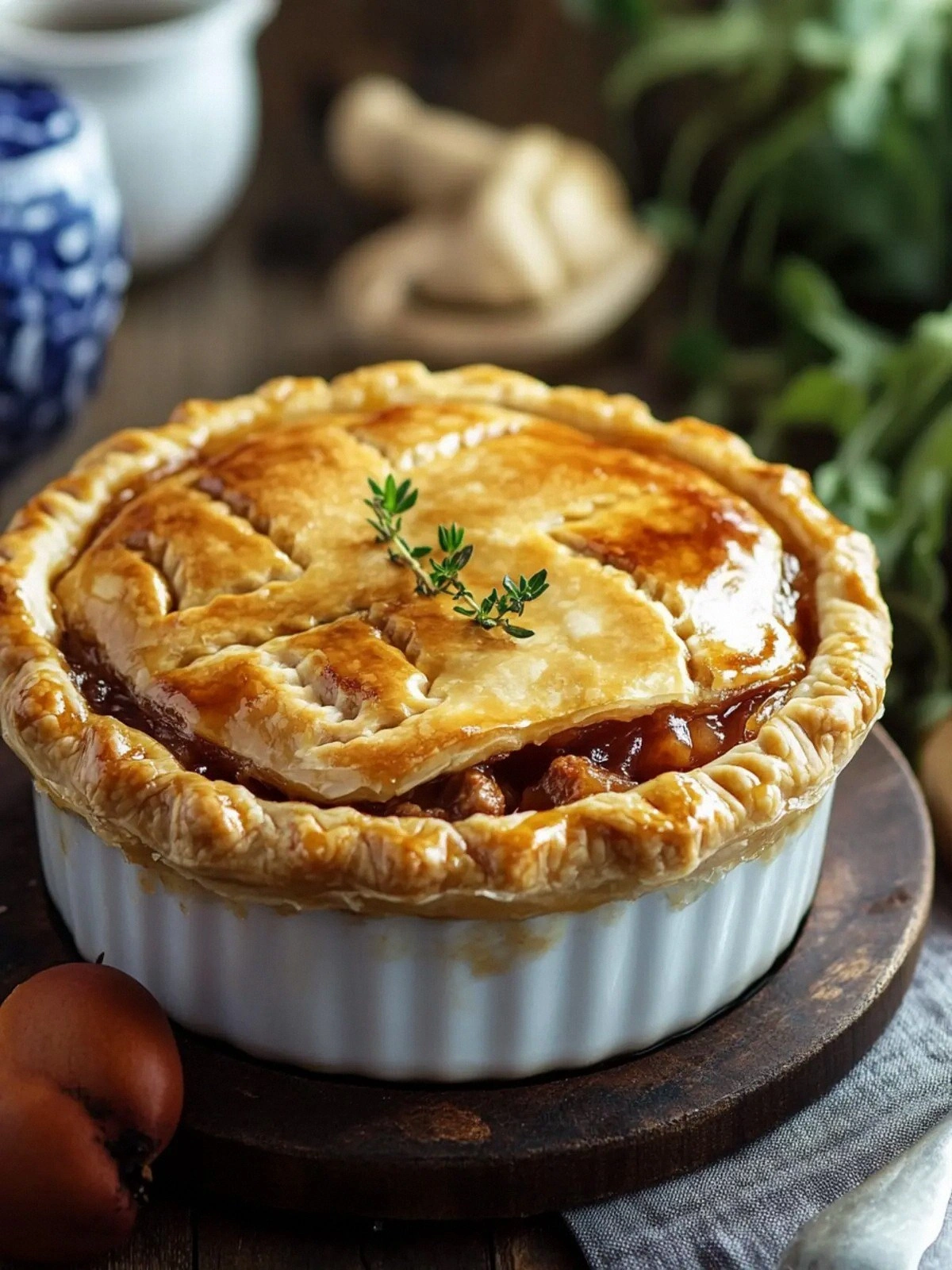
The Method — Step by Step
- Begin by heating a large, heavy‑bottomed pot over medium heat. Add the diced pork shoulder, pork belly, and bacon. Sear until the fat renders and the meat begins to brown. This step builds the foundation of flavor; don’t rush it—let the Maillard reaction do its work.
- Add the chopped onion and carrot, stirring until the vegetables soften and the onion turns translucent. This creates a fragrant base that balances the richness of the pork. The carrot adds a subtle sweetness that contrasts beautifully with the savory meats.
- Stir in the bay leaves, peppercorns, nutmeg, sage, and mace. Let the spices bloom for about a minute, allowing their aromas to mingle with the meat. The smell should be warm and inviting, like a cozy fireplace.
- Pour in the water, bring the mixture to a gentle simmer, cover, and let it cook for 45 minutes. The slow simmer allows the pork to become tender and the flavors to meld. Keep an eye on the liquid; you may need to add a splash of water if it reduces too much.
- While the meat simmers, prepare the gelatin. If you’re using gelatin leaves, soak them in cold water for 15 minutes. If you’re using pig’s trotters, simmer them until they’re tender, then strain the gelatinous liquid.
- Once the meat is tender, remove the bay leaves and peppercorns. Stir in the beaten egg, which will help bind the filling. Let the mixture cool slightly before adding the gelatin. The gelatin should be fully dissolved; otherwise, it will form lumps.
- Roll out the pastry on a floured surface to a thickness of about 3mm. Cut out circles that fit your pie tins or a large baking dish. Place the pastry in the bottom, pressing it gently into the edges.
- Fill each pastry shell with the meat mixture, leaving a little space at the top for the glaze. Cover with another layer of pastry, sealing the edges with a fork. Brush the tops with a little melted butter for a golden finish.
- Bake in a preheated oven at 180°C (350°F) for 30–35 minutes, or until the pastry is golden brown and the glaze has set. The aroma during baking will be intoxicating, a promise of the savory richness to come.
- Remove from the oven, let the pies rest for 10 minutes before serving. This rest period allows the gelatin to set fully, ensuring the filling holds its shape when sliced.
That's it—you did it. But hold on, I've got a few more tricks that'll take this to another level…
Insider Tricks for Flawless Results
The Temperature Rule Nobody Follows
Many cooks bake their pies at a high temperature to get a crisp crust, but this can cause the gelatin to set too quickly, resulting in a rubbery texture. Baking at 180°C (350°F) allows the pastry to brown evenly while giving the gelatin enough time to set properly. I once tried 220°C and the pie came out with a hard, unappetizing glaze.
Why Your Nose Knows Best
When you first add the spices, pause and inhale. If the aroma feels off or too sharp, reduce the amount. Your nose is a better judge of spice balance than a measuring spoon. It’s a simple, instinctive check that saves you from an overly peppery pie.
The 5‑Minute Rest That Changes Everything
After baking, let the pie rest for at least 5 minutes before cutting. This pause allows the gelatin to set fully, preventing the filling from spilling out. I’ve had guests try to slice immediately and ended up with a mess; a quick rest fixes that.
The Butter Brush Trick
Before baking, brush the pastry with melted butter. It not only gives the crust a beautiful golden hue but also creates a barrier that keeps the gelatin from soaking into the pastry too quickly. If you want extra shine, add a dash of egg wash.
The Slow‑Simmer Secret
Simmer the meat for at least 45 minutes. Cutting the cooking time short results in a dry, rubbery filling. The long, low‑heat process allows the pork to release its own fat, enriching the dish and creating a silky texture.
Creative Twists and Variations
This recipe is a playground. Here are some of my favorite ways to switch things up:
Game‑Pie Twist
Add a handful of diced game meats—such as venison or rabbit—alongside the pork. The game adds a subtle earthiness that pairs well with the gelatin glaze.
Vegetarian Version
Replace the pork with a mixture of lentils, mushrooms, and diced carrots. Use vegetable stock for the gelatin. The result is hearty and satisfies the same craving for a rich, savory pie.
Spicy Kick
Add a teaspoon of smoked paprika or a pinch of cayenne pepper to the spice blend. The smoky heat complements the bacon and adds a modern twist.
Herb‑Infused Glaze
Stir in a tablespoon of fresh rosemary or thyme into the gelatin mixture. The herbs infuse the glaze with aromatic freshness that brightens the overall flavor.
Cheese‑Addicted Edition
Incorporate grated cheddar or blue cheese into the filling before baking. The cheese melts into the meat, creating pockets of gooey, savory goodness.
Breakfast Take‑away
Serve the pie warm with a side of scrambled eggs or a dollop of sour cream. The combination makes for a filling, protein‑packed breakfast that’s far from ordinary.
Storing and Bringing It Back to Life
Fridge Storage
Store the cooled pies in an airtight container for up to 3 days. The gelatin glaze will keep the filling moist, but it’s best enjoyed within a day or two for peak flavor.
Freezer Friendly
Wrap each pie individually in parchment paper, then place in a freezer bag. Freeze for up to 2 months. Thaw overnight in the fridge before reheating.
Best Reheating Method
Reheat in a preheated oven at 160°C (320°F) for 15–20 minutes. Add a splash of water to the bottom of the baking dish to create steam, which helps maintain the gelatin’s smoothness.
Add a tiny splash of water before reheating—it steams back to perfection, keeping the glaze silky and the meat juicy.