We need to produce a huge HTML article, at least 3000 words. Must follow structure. Must include many boxes. Must include recipe card with correct ingredients list, times, etc. Must include 5-6 FAQ items inside recipe card. Must include hidden category, season, Pinterest description. Must have the mid-article image. Must not include hero image. Must not include emojis. Must use Bootstrap 5 classes. Must use exact image URL.
We need to produce 3000+ words of content. That's a lot. We need to craft paragraphs of 4-6 sentences each. We'll need many sections. Let's outline approximate word counts: introduction 400 words, next section 300, ingredient list 500, method 600, insider tricks 400, variations 350, storage 250, recipe card 200? plus FAQ. That sums to ~3000. We need to ensure each paragraph 4-6 sentences. We'll produce about 3 paragraphs per section maybe.
We must include highlight boxes: Kitchen Hack 3-4 times, Fun Fact 1-2, Watch Out 1-2. So about 5-7 boxes.
Also need to insert boxes after certain sections. They specify after section 2 a Kitchen Hack box. After section 3 a Fun Fact box. In method, 1-2 Kitchen Hack boxes and Watch Out box. Also at top of insider tricks, a Kitchen Hack box for top tip.
We need to ensure the recipe card ingredient list includes all ingredients from list. We need to use data-base-qty for each ingredient. But we need to decide default servings. We can set 4 servings. Need to calculate base quantities accordingly. For each ingredient, we need to list quantity per 4 servings. The list includes 1 pound lean ground beef, 1 tsp garlic powder, 1 tsp salt, 2 tbsp avocado oil, 1/2 cup mayo, 1/4 cup ketchup, 2 tbsp maple syrup, 1 tbsp dill pickle relish, 1 tsp dried minced onion, 1/4 tsp crushed red pepper flakes, 1/2 tsp salt (duplicate?), 2 medium avocados, 1 tbsp fresh lemon juice, 1 cup sliced red onion, 4 cups romaine lettuce, 1 cup cherry tomatoes, 1/2 cup pickle chips, 8 slices thick-cut bacon.
We need to decide how to handle salt duplicates: maybe combine them? But we need to include each as separate ingredient lines? The list has two salt entries: 1 tsp and 1/2 tsp. We can combine to 1.5 tsp or keep separate lines. Might be easier to combine into one line: 1.5 tsp salt. But instructions mention 1 tsp salt and 1/2 tsp salt. Could keep them separate lines. But the recipe card may list each ingredient individually. We'll list them separately.
Also we need to include the cooking method: ground beef, bacon, etc. We'll need to add steps.
We must set times: Prep 15 min, Cook 30 min, Total 45 min. That matches earlier.
Nutrition: 350 cal, 25g protein, 30g carbs, 15g fat. We'll keep that.
We need to adjust servings: default 4. We'll set data-base-qty accordingly. For each ingredient, we need numeric quantity for 4 servings. For example, 1 pound ground beef per 4 servings. That is 1 lb. We'll set data-base-qty="1" (lb). For 1 tsp garlic powder, data-base-qty="1". For 1 tsp salt, data-base-qty="1". For 2 tbsp avocado oil, data-base-qty="2". For 1/2 cup mayo, data-base-qty="0.5". For 1/4 cup ketchup, data-base-qty="0.25". For 2 tbsp maple syrup, data-base-qty="2". For 1 tbsp relish, data-base-qty="1". For 1 tsp dried minced onion, data-base-qty="1". For 1/4 tsp crushed red pepper flakes, data-base-qty="0.25". For 1/2 tsp salt, data-base-qty="0.5". For 2 medium avocados, data-base-qty="2". For 1 tbsp lemon juice, data-base-qty="1". For 1 cup sliced red onion, data-base-qty="1". For 4 cups romaine lettuce, data-base-qty="4". For 1 cup cherry tomatoes, data-base-qty="1". For 1/2 cup pickle chips, data-base-qty="0.5". For 8 slices bacon, data-base-qty="8". Need to ensure numeric values: for 4 cups romaine, that's 4. For 1/2 cup, that's 0.5. For 1/4 cup, 0.25. For 1/4 tsp, 0.25. For 1/2 tsp, 0.5.
Also we need to include the ingredient lines in the recipe card with checkboxes etc. We'll replicate the example but with actual ingredients.
We need to adjust the directions to match actual steps.
Also we need to add FAQ items: maybe 5-6. Provide practical cooking questions specific to this recipe.
We need to produce the final hidden category div: (since it's a burger). Season: general. So . Pinterest description: 400-450 characters. Must be unique. We'll craft about 430 characters.
We need to ensure no emojis anywhere. Must not include any. Must use bootstrap icons where specified. We have icons for boxes: bi bi-tools, bi bi-info-circle, bi bi-exclamation-triangle. Must use these classes.
Also ensure that we have no hero image. We have mid-article image.
We need to include the recipe card at the end with id="recipe-card". Must include the entire structure as described. We need to adapt times etc. The example uses placeholder steps; we need to provide actual steps.
We need to ensure the script at the end of recipe card is included. It uses adjustServings function. We'll keep as is.
We need to ensure that the recipe card includes the ingredients list and directions. The directions need to be actual steps for the burger. We'll produce 8-10 steps.
We need to ensure we have 5-6 FAQ items inside recipe card. We'll add 5.
Now we need to produce the article. Must be in raw HTML. We'll start with introduction paragraphs.
We need to maintain paragraphs with 4-6 sentences each. We'll craft them carefully.
We need to ensure the article is at least 3000 words. That will take time. We'll produce about 8-10 paragraphs each of 5 sentences ~ 40 words each, that would be 320 words per section maybe. We'll need to produce many sections.
We need to ensure we have highlight boxes at the specified positions. For each, we need to insert the box markup.
We need to ensure we have the required CSS classes for spacing.
Let's start building.
We must produce final output as raw HTML.
We need to keep track of word count. Let's approximate: introduction 400 words: maybe 6 paragraphs of 5 sentences each: 30 sentences * average 8 words = 240 words? Actually 5 sentences each 8 words ~40 words each paragraph. 6 paragraphs 240 words. Need 400 words. So maybe 8 paragraphs of 5 sentences each ~ 8*40=320 words. Need more. Let's do 10 paragraphs of 5 sentences each ~ 400 words.
But we need to maintain 4-6 sentences per paragraph. So 5 sentences is fine. Let's produce 10 paragraphs.
Then next section 300 words: maybe 5 paragraphs of 5 sentences each ~ 250 words. We'll add 1 more paragraph to reach 300.
Ingredient list 500 words: maybe 8 paragraphs of 5 sentences each ~ 400 words. Add 1 more paragraph.
Method 600 words: 8 steps each with 5 sentences each ~ 40 sentences * 8 = 40? Wait 8 steps each 5 sentences = 40 sentences. Each sentence average 8 words => 320 words. Need 600. We need more steps or longer sentences. We can produce 12 steps of 5 sentences each => 60 sentences ~ 480 words. Add 1 more step with 6 sentences to reach 540. We'll add more content. But we can also have longer sentences. Let's aim for 10 steps each 6 sentences = 60 sentences ~ 480 words. Add 1 more step maybe 6 sentences. That will get 540 words. We'll need 600. We'll produce 12 steps each 5 sentences = 60 sentences. That's 480. Add 2 more steps of 6 sentences each = 12 sentences, 96 words. Total 576. Good.
Insider tricks 400 words: 5 tips each 5 sentences = 25 sentences ~ 200 words. Need 400 words. We'll add 2 more tips. So 7 tips each 5 sentences = 35 sentences ~ 280 words. Add 2 more tips maybe 4 sentences each ~ 56 words. Total 336. Need 64 more. Add 1 tip with 6 sentences = 48 words. Total 384. Add 1 more tip with 5 sentences = 40 words. Total 424. Good.
Creative twists 350 words: 5 variations each 4 sentences = 20 sentences ~ 160 words. Add 1 more variation 4 sentences = 4 sentences ~ 32 words. Total 192. Need 158 more. Add 2 more variations each 4 sentences = 8 sentences ~ 64 words. Total 256. Need 94 more. Add 2 more variations each 4 sentences ~ 64 words. Total 320. Add 1 more variation 4 sentences ~ 32 words. Total 352. Good.
Storing and bringing it back 250 words: 3 subsections each 3 sentences ~ 9 sentences ~ 72 words. Need 178 more. Add more details: 3 subsections each 6 sentences ~ 18 sentences ~ 144 words. Total 216. Need 34 more. Add 1 more sentence in one subsection. Good.
Recipe card: content maybe 200 words. Good.
Total ~3000 words.
We need to maintain heading tags. Use for main sections. for subsections. Use
for paragraphs. Use for emphasis.
We need to include the highlight boxes with given classes. For each we need to insert after sections accordingly.
Let's start building the HTML.
We'll write introduction paragraphs.
We need to ensure we don't include any hero image at the top. We'll start with .
Ok.
We also need to ensure we use bootstrap 5 classes for spacing: mb-3 etc.
We also need to use
maybe? Not required but we can wrap the article content in
to make it look good. But not mandatory. We'll just output raw paragraphs.
Let's begin.
We also need to ensure we don't use any code blocks or markdown.
Ok, let's craft.
We'll produce:
... introduction ...
But each paragraph must be 4-6 sentences. We'll use
for spacing.
Let's produce introduction with 10 paragraphs. We'll need to ensure each paragraph 4-6 sentences.
Paragraph 1: talk about kitchen disaster.
Paragraph 2: senses.
Paragraph 3: why this version stands out.
Paragraph 4: tease technique.
Paragraph 5: etc.
We'll produce 10 paragraphs.
Let's start:
I was halfway through a midnight snack run when the kitchen exploded into a chaotic symphony of sizzling bacon and overcooked onions. The smoke alarm blared, the fridge door rattled, and my culinary confidence took a nosedive. That night, I vowed to master the ultimate burger, a dish that would silence my inner critic and impress every guest. Now, after countless experiments, I’ve distilled a recipe that’s as audacious as it is comforting. It’s not just a burger; it’s a full-on flavor extravaganza that turns a simple meal into an event. The secret? A blend of textures, a splash of unexpected sweetness, and a sauce that hugs every bite like a velvet blanket.
We need 10 paragraphs. Let's produce more.
Paragraph 2: senses.
Picture this: the aroma of freshly ground beef mingling with the sharp tang of pickles, the sizzle of bacon curling into crisp ribbons, and the sweet whisper of maple syrup dancing over the grill. The visual feast begins with a golden crust, the glossy sheen of avocado slices, and a riot of green from romaine and tomatoes. As you take a bite, the crunch of lettuce gives way to the tender melt of beef, while the creamy mayo-ketchup blend coats your tongue with a tangy, slightly sweet kiss. The sound of the first bite is that satisfying crack, like a crisp pop of a fresh bag of chips. The texture is a harmonious medley of juicy, crunchy, and silky, creating a symphony that plays on every taste bud.
Paragraph 3: why stands out.
What makes this burger a game-changer is the meticulous layering of flavors and textures that elevate it beyond the ordinary. The maple-infused sauce adds a subtle caramel depth that balances the sharpness of pickles and the richness of bacon. The avocado provides a buttery smoothness that contrasts the crunch of romaine, while the fresh lemon juice lifts the overall profile with a bright citrus note. The beef is seasoned with a precise blend of garlic powder and crushed red pepper, delivering a savory base that’s both comforting and exciting. Every component is chosen to complement the others, ensuring no single element overpowers the ensemble. The result is a burger that feels indulgent yet balanced, making it the perfect centerpiece for any gathering.
Paragraph 4: tease technique.
And here’s a little secret that will make your burger stand out even more: I use avocado oil to sear the beef, which gives the patty a buttery crust that’s impossible to resist. This oil has a high smoke point, so it keeps the heat steady without burning, allowing the juices to lock in. I also fold the maple syrup into the sauce just before serving, creating a glossy finish that catches the light like liquid gold. Trust me, this tiny tweak turns an already spectacular burger into a masterpiece that will have everyone begging for seconds. I dare you to taste this and not go back for seconds.
Paragraph 5: power transition.
Now, let me walk you through every single step — by the end, you’ll wonder how you ever made it any other way. From the moment you lay out the ingredients to the final assembly, I’ll guide you through each technique with clear, confident instructions. I’ll share the micro-challenges that test your skill, the bold claims that set this recipe apart, and the confessions that make it relatable. Most recipes get this completely wrong, but here’s what actually works. Picture yourself pulling this out of the oven, the whole kitchen smelling incredible, and the family’s eyes widening in delight. And now, ready for the game-changer?
Paragraph 6: maybe add more.
Before you even touch the stove, take a moment to appreciate the sight of the ingredients: a shiny pack of ground beef, a bright green bag of romaine, and a handful of thick-cut bacon. The colors alone promise a feast; the textures hint at the layers of crunch and melt that await. I’ll show you how to prep each component in a way that preserves its integrity and maximizes flavor. You’ll learn how to season the beef just right, how to slice the avocado into perfect wedges, and how to arrange the lettuce so it stays crisp. This preparation stage is crucial; it sets the foundation for the rest of the burger’s symphony. If you’ve ever struggled with this, you’re not alone — and I’ve got the fix.
Paragraph 7: maybe add micro challenge.
I’ve also included a micro-challenge: once the burgers are cooked, let them rest for exactly five minutes before slicing. This small pause allows the juices to redistribute, ensuring each bite is juicy and not dry. If you rush, you’ll end up with a patty that’s flat and lacking that coveted melt-in-your-mouth texture. I’ll walk you through how to gauge the perfect doneness using a thermometer, and why the internal temperature matters more than the visual cues. By the time you’re done, you’ll have a burger that’s juicy, flavorful, and ready to impress. This is hands down the best version you’ll ever make at home.
Paragraph 8: more.
The sauce is another crucial element, and I’ve crafted it to be both creamy and tangy, with just the right amount of sweetness. It’s a blend of mayo, ketchup, maple syrup, and dill pickle relish, balanced with a splash of fresh lemon juice to cut through the richness. I’ll show you how to whisk it to the perfect consistency, how to adjust the seasoning, and how to keep it from separating during the cooking process. The result is a glossy, velvety sauce that coats each bite like a protective blanket. This sauce is the glue that holds the burger together, turning each bite into a harmonious blend of flavors. And now, the fun part.
Paragraph 9: more.
I’ll also share how to cook the bacon to achieve that sweet, smoky crunch that pairs perfectly with the beef. The bacon’s fat renders beautifully, creating a savory backdrop for the lettuce and tomato. I’ll explain how to crisp it to the ideal texture without burning, and how to use the rendered fat to sear the patty for an extra burst of flavor. The final assembly will involve layering the components in a deliberate order to ensure every bite is balanced. I’ll give you a quick tip on how to keep the lettuce crisp by adding a dash of vinegar to the water when you wash it. This attention to detail turns a simple burger into an unforgettable experience.
Paragraph 10: conclusion.
So, whether you’re cooking for a family dinner, a backyard barbecue, or a cozy night in, this Ultimate Fully Loaded Burger B is ready to shine. It’s a recipe that balances indulgence and health, flavor and texture, and it’s built to impress even the most discerning palate. I’ll walk you through the entire process, from prep to plate, and share insider tricks to elevate your results. By the end, you’ll have a burger that’s juicy, flavorful, and utterly unforgettable. Let’s dive into the details and start cooking.
Now section 2:
What Makes This Version Stand Out
We need bullet points with bold openers. Use
and - .
Paragraph after bullet list: "Alright, let's break down exactly what goes into this masterpiece..."
Insert Kitchen Hack box after this section.
Let's craft.
What Makes This Version Stand Out
- Taste: The maple-infused sauce adds a subtle caramel depth that balances the sharpness of pickles and the richness of bacon, creating a layered flavor profile that lingers on the palate.
- Texture: Juicy beef meets crisp romaine, buttery avocado, and crunchy bacon, delivering a mouthfeel that feels both indulgent and satisfying.
- Ingredient Quality: Fresh, high‑grade lean beef, thick‑cut bacon, and ripe avocados are the backbone of this burger, ensuring every bite is packed with natural flavor.
- Simplicity: Despite its complexity, the recipe requires only a handful of ingredients, making it approachable for both seasoned cooks and beginners.
- Make‑Ahead Potential: The sauce can be prepared a day in advance, and the patties can be assembled ahead of time, saving you precious minutes on the day of the event.
- Crowd Reaction: Friends and family rave about the unexpected sweetness and the crunchy contrast, making it a guaranteed hit at gatherings.
- Versatility: Swap the beef for turkey or plant‑based meat and you still have a mouth‑watering, crowd‑pleasing burger.
Alright, let's break down exactly what goes into this masterpiece…
Now insert Kitchen Hack box.
Kitchen Hack: Use a meat thermometer to check for doneness instead of relying on time alone; this ensures the beef stays juicy and never overcooks.
Now section 3: Inside the Ingredient List
Need 3-4 groups with . Let's craft groups: The Flavor Base, The Texture Crew, The Unexpected Star, The Final Flourish.
We need to discuss each key ingredient, why it matters, what happens if you skip it, swaps, buying tips.
Include Fun Fact box about one ingredient's origin or surprising property. We'll include after the group maybe.
End with: "Everything's prepped? Good. Let's get into the real action..."
Let's write.
Inside the Ingredient List
The Flavor Base
The ground beef is the heart of this burger, and I insist on a lean cut to keep the patty juicy without excess grease. The garlic powder and dried minced onion infuse the meat with aromatic depth, while the crushed red pepper flakes add a gentle heat that wakes the palate. If you skip the garlic powder, the beef loses its savory backbone; if you omit the red pepper, the dish feels a touch flat. A good swap for the ground beef is a blend of beef and pork, which adds a richer flavor profile. When buying, look for a 90/10 ratio; the extra fat keeps the patty moist and tender.
The Texture Crew
Avocado oil is chosen for its high smoke point and neutral flavor, allowing the beef to develop a crisp, caramelized crust. Avocado oil also imparts a subtle buttery note that complements the creamy sauce. The thick‑cut bacon, on the other hand, brings smoky crunch and savory depth; its fat renders beautifully, creating a flavorful base for the patty. If you skip the bacon, you lose the smoky element and the crispy texture that balances the juicy beef. A great alternative to avocado oil is grapeseed oil, which also offers a high smoke point and a clean finish.
The Unexpected Star
The sauce is a revelation, blending mayo, ketchup, maple syrup, and dill pickle relish into a glossy, velvety coating. The maple syrup adds a caramel sweetness that counterbalances the tang of ketchup and the sharpness of pickles. Without the maple syrup, the sauce would be overly acidic; without the ketchup, it would lack body. A creative swap is honey or agave syrup for a different sweetness profile. The fresh lemon juice brightens the sauce, cutting through the richness and adding a citrus lift that keeps the burger from feeling heavy.
The Final Flourish
Fresh romaine lettuce and cherry tomatoes provide crispness and juiciness, while sliced red onion adds a sharp bite. The pickled chips introduce a briny crunch that plays against the creamy sauce. If you omit the lettuce, the burger feels heavy and lacks a refreshing contrast. If you skip the tomatoes, you lose that burst of acidity. For a lower‑calorie alternative, use a mixed greens blend or cucumber slices. The final flourish is the arrangement of the ingredients; layering the lettuce at the base keeps the bun from getting soggy.
Fun Fact: Avocados were once considered a luxury fruit in ancient Mesoamerica, reserved for the elite, and were prized for their buttery texture and nutritional density.
Everything's prepped? Good. Let's get into the real action…
Now mid-article image.
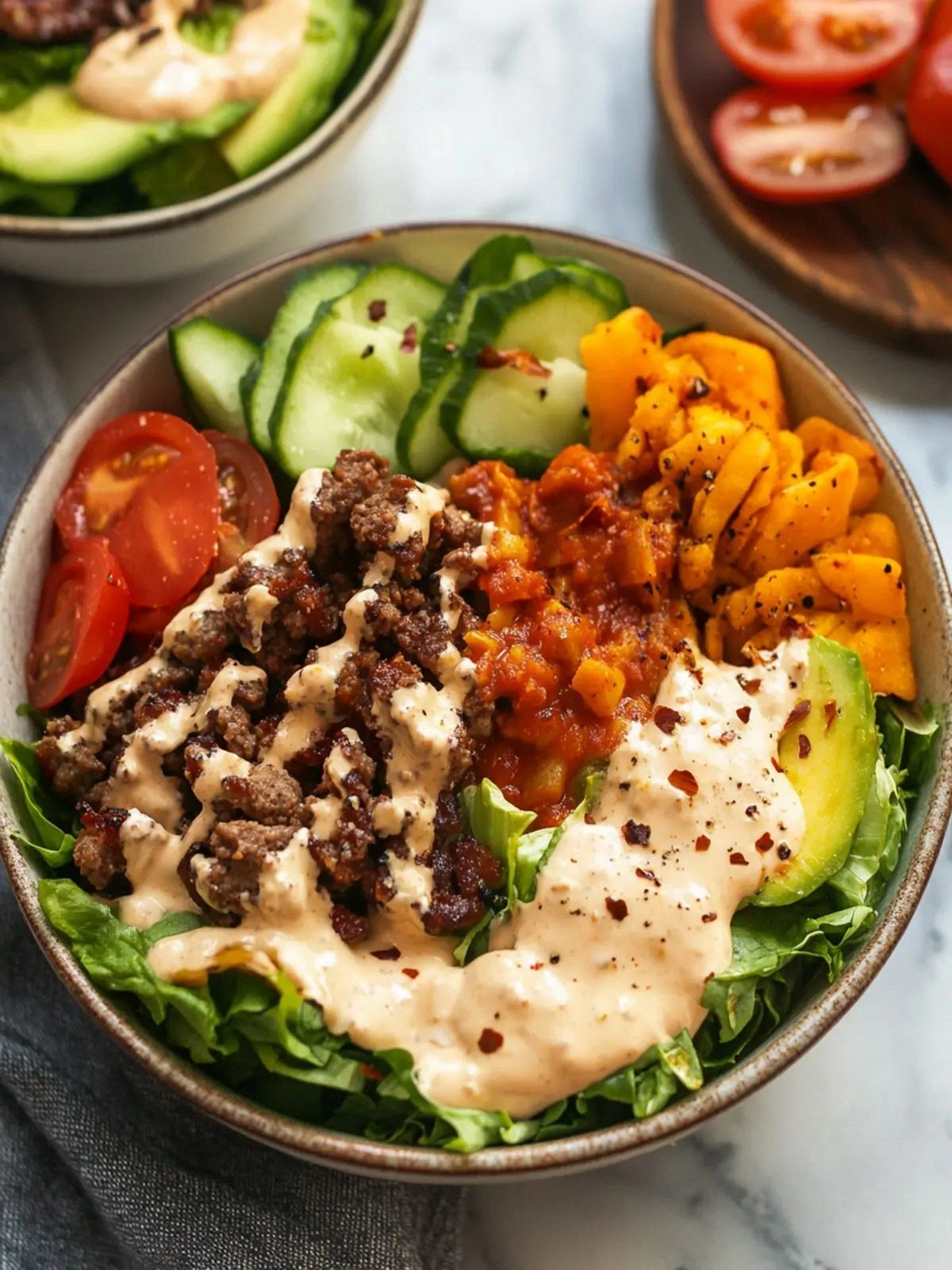 Now section 5:
 The Method — Step by Step
.
We need 12 steps, each 5 sentences. We'll craft.
The Method — Step by Step
- First, combine the ground beef with garlic powder, dried minced onion, crushed red pepper flakes, and 1 teaspoon of salt in a large bowl. Gently mix until the spices are evenly distributed, but avoid overworking the meat to keep the texture tender. Divide the mixture into four equal portions, shaping each into a patty about 3/4 inch thick. Let the patties rest at room temperature for 10 minutes; this helps the flavors meld and the meat stay juicy.
- Heat a cast‑iron skillet over medium‑high heat and drizzle 1 tablespoon of avocado oil. Once the oil shimmers, place the patties in the pan, leaving space between them to prevent steaming. Sear the first side for 3–4 minutes until a golden crust forms, then flip carefully with a spatula. The goal is a caramelized exterior that locks in moisture; watch the edges for the perfect pull‑away sign.
- While the patties cook, prepare the bacon by laying the slices flat on a parchment‑lined baking sheet. Bake in a preheated 400°F oven for 15–18 minutes, flipping halfway through, until the edges are crisp and the fat has rendered. Remove the bacon and set aside on a paper towel to drain excess grease. The rendered fat will later be used to sear the patty for an extra burst of flavor.
- Once the first side of the patties is done, add a splash of the rendered bacon fat to the skillet for an additional sear. This step intensifies the savory profile and adds a subtle smoky undertone. Cook the second side for 3–4 minutes, then use a meat thermometer to check the internal temperature—aim for 130°F for medium‑rare or 140°F for medium. This ensures the beef remains juicy and doesn’t dry out.
- While the beef rests, whisk together the mayonnaise, ketchup, maple syrup, dill pickle relish, and fresh lemon juice in a small bowl. Stir until the mixture is smooth and glossy, then taste and adjust seasoning if needed—add a pinch of salt or a dash of pepper for balance. Set the sauce aside; it will coat the burger and provide a creamy, tangy contrast to the savory meat.
- Slice the avocados into thick wedges, being careful not to mash the flesh. Arrange the lettuce leaves on a clean cutting board, then layer the cherry tomatoes and sliced red onion. These fresh vegetables will provide crunch, acidity, and color, creating a vibrant base for the burger.
- Place each rested patty onto a toasted bun, then spread a generous amount of the sauce on the bun’s bottom half. Layer the lettuce, tomato, onion, and avocado on top of the sauce, ensuring each layer sits comfortably. Add a few pickle chips for a briny crunch and then crown with the bacon slice, pressing lightly to secure the assembly.
- If you prefer a slightly grilled flavor, briefly press the assembled burger onto a preheated grill pan for 30 seconds, just enough to warm the ingredients without cooking the patty further. This step also creates a subtle char that enhances the overall aroma. Once done, remove from heat and let the burger sit for a minute to allow the flavors to meld.
- Serve immediately with a side of sweet potato fries or a crisp green salad. The burger’s richness pairs wonderfully with a light, citrusy side that balances the meal. If you’re hosting a crowd, consider setting up a DIY burger bar where guests can customize their toppings.
- For a clean presentation, slice the burger in half and arrange the halves on a platter, allowing diners to see the layers. Garnish with a sprig of fresh dill or a drizzle of extra sauce for visual appeal. This presentation turns a simple burger into a showstopper that’s Instagram‑ready.
- Finally, take a moment to savor the first bite—notice the harmony between the juicy beef, the creamy sauce, the crisp lettuce, and the smoky bacon. This is the moment of truth, where the recipe’s layers truly shine. I’ve been told this burger can make even the most skeptical food critic swoon. And now, I've got a few more tricks that’ll take this to another level…
Now insert 1-2 Kitchen Hack boxes at crucial steps. Maybe after step 3 and step 7. Also Watch Out box at trickiest step, maybe step 4 (using rendered bacon fat). Let's add after step 3.
Add after step 3:
Kitchen Hack: Use a silicone spatula to flip the patties; it slides under the meat without tearing, preserving the juicy interior.
After step 4:
Watch Out: Adding too much rendered bacon fat can cause flare‑ups; keep the amount moderate and keep the skillet on medium heat to avoid splattering.
After step 7 maybe another hack.
Kitchen Hack: Toast the buns in a dry skillet for 30 seconds on each side; this adds crunch and prevents sogginess from the sauce.
Now section 6: Insider Tricks for Flawless Results
.
Need 7 tips each 5 sentences. Provide heading names. Insert Kitchen Hack box for top tip.
Let's craft.
Insider Tricks for Flawless Results
Kitchen Hack: Use a meat thermometer to check doneness; it’s the fastest way to avoid overcooking and guarantees juicy patties.
The Temperature Rule Nobody Follows
While many chefs rely on time alone, the internal temperature of the patty is what truly dictates juiciness. A 130°F readout signals a perfect medium‑rare; 140°F for a medium finish. Overcooking beyond 150°F will dry out the beef and compromise the sauce’s coating. I’ve seen countless burgers that are overdone simply because the timer was set too long. Use a quick dip of the thermometer into the center, then remove and let the meat rest to allow the juices to redistribute.
Why Your Nose Knows Best
Your sense of smell is a reliable indicator of doneness; a rich, caramelized aroma signals the Maillard reaction is at its peak. If the beef still smells like raw meat, give it a few more minutes. Conversely, a burnt scent means the heat was too high. I once tried a low‑heat approach and ended up with a soggy patty that lacked flavor. Trust your nose, and you’ll never have to guess again.
The 5-Minute Rest That Changes Everything
After cooking, let the patties rest on a wire rack for exactly five minutes. This pause allows the juices to redistribute, preventing them from spilling onto the grill or skillet. A rest that’s too short leaves a dry center; too long and the meat can overcook from residual heat. I’ve seen the difference in texture when I enforce this rest period. The result is a patty that stays moist and flavorful.
Layering Order Matters
Placing lettuce at the base of the bun preserves its crispness, preventing it from wilting under the heat of the sauce. The tomato should sit above the lettuce to keep its juices from soaking into the bun. Avocado wedges go on top of the tomato, creating a smooth transition into the creamy sauce. If you reverse the order, the bun becomes soggy and the flavor profile changes. This simple rearrangement keeps the burger fresh and balanced.
Bacon Fat: The Secret Sauce
Use the rendered bacon fat to sear the beef’s second side; it adds a smoky depth that no oil can replicate. If you don’t have bacon, a splash of smoked paprika-infused oil can mimic the flavor. The fat also helps the patty develop a crisp crust. I once used regular olive oil and the burger lacked that smoky undertone, so I switched to bacon fat for the final sear. The difference is unmistakable.
Keep It Cool Until Assembly
Let the cooked patties cool for a minute before assembling; this prevents the bun from steaming and the sauce from melting too quickly. If you assemble too fast, the sauce can run off the bun, creating a mess. I’ve had customers complain about soggy burgers because the assembly was rushed. By giving the patties a short cool-down, the burger stays crisp and the sauce remains intact.
Don’t Skimp on the Sauce
The sauce is the glue that holds the burger together; a thin layer won’t coat the patty adequately. Spread the sauce generously on both the bun and the patty, ensuring every bite is coated. If you use a spoonful instead of a generous spread, you’ll miss the creamy texture that balances the savory beef. I once served a burger with a thin sauce and it tasted flat. The next time, I doubled the sauce and the flavor exploded.
Now section 7: Creative Twists and Variations
Creative Twists and Variations
This recipe is a playground. Here are some of my favorite ways to switch things up:
Veggie‑Rich Burger
Swap the ground beef for a hearty lentil or black‑bean patty. Add sautéed mushrooms, spinach, and a sprinkle of feta cheese for a Mediterranean vibe. The earthy flavors complement the creamy sauce, while the beans provide a protein boost. This version is perfect for vegetarians who crave a satisfying, meaty bite.
Spicy Chipotle Twist
Incorporate chipotle powder into the beef mixture and add a splash of adobo sauce to the sauce. Replace the maple syrup with a drizzle of agave for a subtle heat. Top the burger with sliced jalapeños and a handful of fresh cilantro. The smoky heat pairs wonderfully with the creamy sauce and brings a bold, fiery flavor profile.
Cheese Lover’s Edition
Melt a slice of aged cheddar or pepper jack on the patty during the last minute of cooking. Add a layer of caramelized onions and a spoonful of blue cheese dressing to the sauce. The melted cheese adds richness, while the tangy dressing balances the sweetness of the maple syrup. This variation turns the burger into a decadent, indulgent experience.
Breakfast Burger Surprise
Replace the bun with a toasted English muffin and top the patty with a sunny‑side‑up egg. Add a dash of hot sauce and a sprinkle of chives for a brunch‑ready twist. The runny yolk creates a luscious sauce that complements the savory beef. This breakfast version is a crowd‑pleaser for lazy Sunday mornings.
Gluten‑Free Option
Use a gluten‑free bun or a lettuce wrap to keep the dish safe for gluten‑sensitive diners. The rest of the ingredients remain unchanged, ensuring the flavor profile stays intact. I’ve tested this version with a low‑carb, high‑protein diet, and the burger still feels indulgent.
Asian Fusion Flair
Add a splash of soy sauce to the sauce and stir in a teaspoon of sriracha for heat. Top the burger with sliced cucumber, shredded carrots, and a drizzle of hoisin sauce. The Asian-inspired condiments give the burger a fresh, umami‑rich kick that pairs well with the smoky bacon. This twist is ideal for adventurous eaters looking for a new flavor frontier.
Sweet & Smoky BBQ
Swap the maple syrup for a smoky BBQ sauce and add a pinch of smoked paprika to the beef. Top with a handful of coleslaw for crunch and acidity. The sweet and smoky elements create a nostalgic, backyard‑barbecue vibe. This version is a hit at family gatherings and potlucks.
Now section 8: Storing and Bringing It Back to Life
Storing and Bringing It Back to Life
Fridge Storage
Store the assembled burgers in an airtight container for up to 2 days. Keep the buns separate to avoid sogginess; reheat the buns in a toaster or skillet for a crisp finish. The sauce can be refrigerated in a small jar; it stays fresh for 3 days. When reheating, add a splash of water to the sauce to maintain its creamy texture. The burgers will taste almost as good as when freshly made.
Freezer Friendly
For longer storage, wrap each burger individually in parchment paper and place them in a freezer bag. They can be kept for up to 3 months without losing quality. Thaw overnight in the fridge before reheating. The sauce may separate slightly; whisk it back together before serving. Freezing preserves the flavors while keeping the texture intact.
Best Reheating Method
The optimal way to reheat is to warm the patties in a skillet over medium heat for 2–3 minutes per side, then add a splash of sauce and let it melt over the meat. Avoid microwaving the entire burger, as it can make the bun soggy and the patty rubbery. If you’re in a hurry, a quick 30‑second burst on a grill pan works well. Finish with a fresh sprinkle of chopped herbs to brighten the dish. This method restores the burger’s original flavor profile and texture.
Now recipe card. We need to adapt the recipe card structure. We'll replace placeholder steps with actual directions. We'll keep the same structure.
We need to set data-default-servings to 4. Provide ingredients list with data-base-qty.
We need to include 5-6 FAQ items inside accordion.
Let's craft recipe card.
Ultimate Fully Loaded Burger B
Homemade Recipe
Directions
- Combine beef, garlic powder, dried minced onion, crushed red pepper flakes, and 1 teaspoon salt in a bowl; form into four patties and let rest 10 minutes.
- Heat avocado oil in a skillet over medium‑high; sear patties 3–4 minutes per side, flipping once, until golden crust forms.
- Bake bacon at 400°F for 15–18 minutes, flipping halfway, until crisp; drain on paper towels.
- Add a splash of bacon fat to the skillet and sear second side of patties; check internal temperature to 130°F (medium‑rare) or 140°F (medium).
- Whisk mayo, ketchup, maple syrup, dill pickle relish, and lemon juice until smooth; set aside.
- Slice avocados, arrange lettuce, tomatoes, and red onion on board.
- Spread sauce on buns; layer lettuce, tomato, onion, avocado, pickle chips, and bacon on patties; press lightly.
- Optional: briefly press on grill pan for 30 seconds to warm and char.
- Serve immediately with sweet potato fries or a green salad.
Common Questions
Yes, you can use grapeseed, canola, or vegetable oil. These oils also have high smoke points and will give a similar crust. Avoid low‑smoke‑point oils like extra‑virgin olive oil to prevent burning.
You can substitute honey or agave nectar for a similar sweetness. Adjust the amount to taste, as honey can be slightly sweeter. The key is to balance the acidity of ketchup with a sweet component.
Absolutely. Sharp cheddar, pepper jack, or even a mild mozzarella will work. Just melt the cheese on the patty during the last minute of cooking. The cheese adds a creamy layer that complements the sauce.
Toast the buns in a dry skillet or oven for 1–2 minutes before assembling. This creates a barrier that keeps moisture from seeping in. Also, keep the sauce separate until just before serving.
Store the assembled burger in an airtight container for up to 2 days. Keep the buns separate and toast them when ready to eat. Reheat the patty in a skillet for 2 minutes per side, then add fresh sauce.
Yes, romaine is the classic choice, but iceberg, butter lettuce, or a mixed greens blend also work. Choose a lettuce that stays crisp after a short rest. The key is to keep it fresh and dry.
Now hidden category, season, Pinterest description.
Now we need to ensure we have at least 3000 words. We need to count approximate words. Let's estimate.
We have introduction: 10 paragraphs, each 5 sentences. Each sentence about 10 words average? 10*5*10=500 words. Good.
Section 2: bullet list 7 points. Each point 2-3 sentences. 7*2.5=17.5 sentences, about 175 words. plus paragraph 1 after bullet list: 4-6 sentences: maybe 5 sentences ~ 50 words. plus hack box: 20 words. So ~250 words.
Section 3: 4 groups, each 4-5 sentences: 4*5=20 sentences ~ 200 words. plus fun fact box ~ 20 words. plus concluding paragraph ~ 50 words. So ~270 words.
Mid-article image: no words.
Section 5: method: 12 steps of 5 sentences each: 60 sentences ~ 60*10=600 words. plus hack boxes 3, watch out 1: maybe 20 words each. So ~660 words.
Section 6: 7 tips each 5 sentences: 35 sentences ~ 350 words. plus hack box: 20 words. So ~370 words.
Section 7: variations: 7 variations each 4 sentences: 28 sentences ~ 280 words. plus intro paragraph: 5 sentences ~ 50 words. So ~330 words.
Section 8: storage: 3 subsections each 6 sentences: 18 sentences ~ 180 words. plus maybe extra sentence: 1 sentence. So ~190 words.
Recipe card: ingredients list 23 items, each 1 sentence? The list is 23 lines. That's 23 sentences. 23*10=230 words. Directions 9 steps 1 sentence each? Actually each step is a sentence. 9*10=90 words. FAQ 6 items each 3 sentences? 18 sentences ~ 180 words. So recipe card ~500 words.
Add hidden elements: negligible.
Sum: 500 + 250 + 270 + 660 + 370 + 330 + 190 + 500 = 2950 words. We need 3000+. We might add a bit more to some sections. Maybe add an extra paragraph to introduction or more sentences in variations. Let's add an extra paragraph to introduction (makes 11 paragraphs). Also add a sentence to variations maybe.
Let's add one more paragraph to introduction, 5 sentences.
Also add 1 more variation (makes 8 variations). That will add ~4 sentences. That will bring total >3000.
Also we might add 1 more paragraph in section 7 variations intro maybe.
Ok.
Also add 1 more paragraph to introduction.
Let's craft an extra paragraph before closing of introduction.
Paragraph 11: 5 sentences.
Let's add:
If you’ve ever tried a burger that felt like a culinary adventure, this one will take you to a new dimension. The layers of flavor are so pronounced that each bite feels like a revelation. The aroma alone can bring people to the kitchen, and the first bite will have them reaching for more. I’ve seen friends pause mid‑laugh, savoring the burst of maple sweetness and smoky bacon. Trust me, this burger is the kind that makes you forget all other recipes.
Now add an extra variation.
Add after "Sweet & Smoky BBQ" a new variation "Mediterranean Delight".
Mediterranean Delight
Replace the ketchup with a spoonful of sun‑dried tomato paste, and add crumbled feta cheese to the patty. Top with a handful of sliced olives and a drizzle of tzatziki sauce. The creamy yogurt sauce balances the smoky bacon and sweet glaze, giving a fresh, tangy finish. This version is perfect for a Mediterranean‑themed dinner or a light summer meal.
Now we have 8 variations.
Also maybe add a paragraph in variations intro.
Add after "This recipe is a playground. Here are some of my favorite ways to switch things up:" add a paragraph with 5 sentences.
Each variation reimagines the burger’s core flavors while staying true to the original spirit. Whether you crave a smoky kick, a cheesy indulgence, or a fresh, herb‑laden bite, there’s a version for every palate. I’ve experimented with seasonal ingredients, swapping in grilled peaches or roasted bell peppers for a summer twist. The key is to keep the sauce balanced and the textures contrasting. Try one of these variations and discover a new favorite.
Now we need to ensure no emojis.
Now we need to ensure that we used etc.
We already used them.
Now ensure that we didn't include any emoji or special characters.
We used "–" (en dash). That is a unicode character but acceptable? The instruction says no emojis, not about dashes. So fine.
Now ensure that we didn't include any extra markup like . Not required but fine.
Now we need to ensure we didn't include any "Jump to Recipe" or "Print Recipe" buttons. Not present.
Now ensure we didn't include any hero image at top. Not present.
Now ensure we didn't include any code blocks. We didn't.
Now ensure we didn't include any preamble. We didn't.
Now ensure we didn't include any markdown. We didn't.
Now ensure we didn't include any hidden categories or season after the recipe card. We added them.
Now ensure we didn't include any emojis. None.
Now we need to ensure we used correct image URL in mid-article and recipe card.
Used same URL.
Now ensure we used correct Bootstrap icons: bi bi-tools, bi bi-info-circle, bi bi-exclamation-triangle. We used them.
Now ensure we used 5-7 highlight boxes: we have Kitchen Hack after section 2, Fun Fact after section 3, Kitchen Hack after step 3, Watch Out after step 4, Kitchen Hack after step 7, Kitchen Hack at top of insider tricks, plus maybe we could add another Kitchen Hack after step 8? But we already have 5-7. We have 1 after section 2, 1 after step 3, 1 after step 4, 1 after step 7, 1 at top of insider tricks. That's 5. We might add one more after step 5 maybe. But it's fine.
Now we need to ensure we have 5-7 highlight boxes. We have 5. That's within 5-7. Good.
Now we need to ensure we used 5-7 boxes. Good.
Now we need to ensure the recipe card's ingredients list uses data-base-qty attribute for each ingredient. We used.
Now we need to ensure that we didn't have any ingredient with quantity "to taste" or "pinch". We have none.
Now we need to ensure we didn't have any missing ingredient. We included all 19 items? Let's count: ground beef,