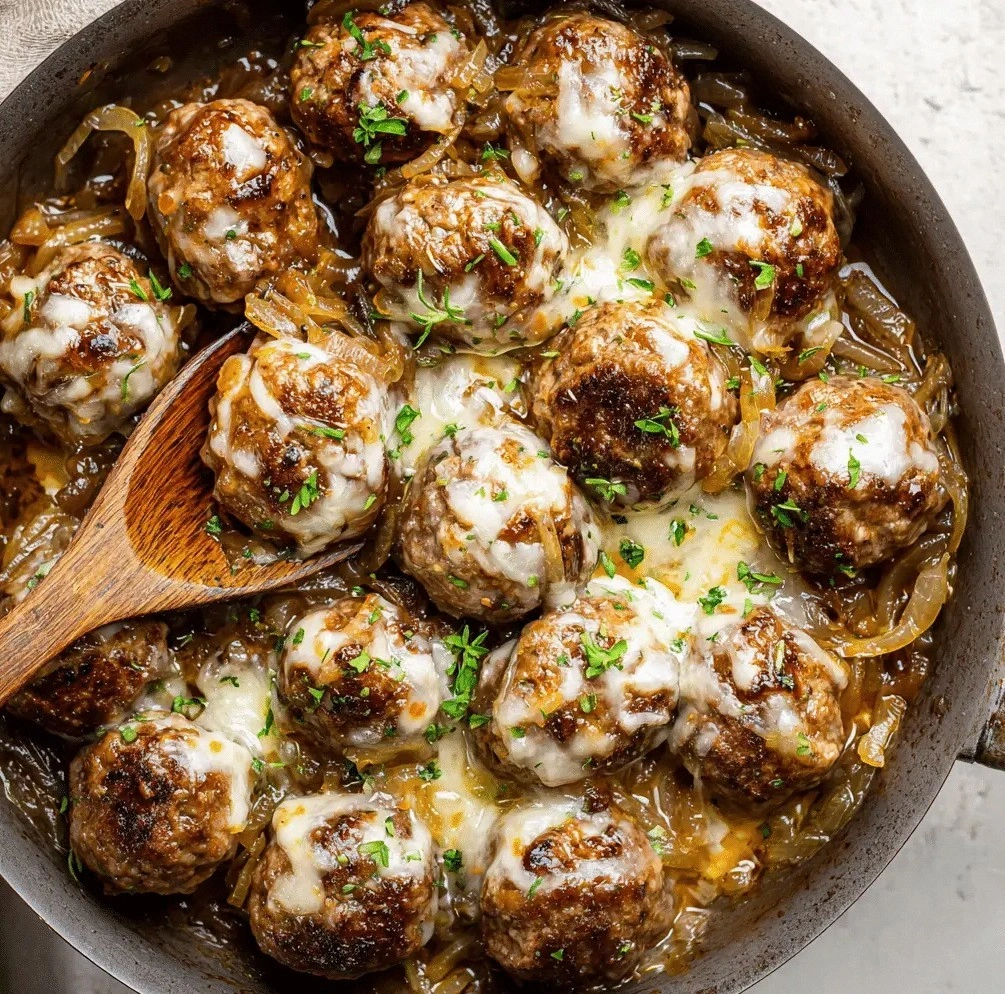
I still hear the clatter of the kitchen counter in the back of my mind, the way the onions slipped off the cutting board like tiny, caramelized moons. It was a Saturday afternoon, the kind of day when the fridge is a mystery and the only thing you know for sure is that you need a comfort food that feels like a hug. I was halfway through a recipe that promised “French‑style meatballs” and halfway through a nightmare of dry, flavorless meatballs that fell apart on the plate. I stared at the pot of caramelized onions, the scent thickening the air, and thought, “This is where the magic happens.”
Picture this: a golden, buttery sauce that clings to each meatball like a velvet blanket, the caramelized onions releasing a sweet, almost buttery sweetness that cuts through the richness of the meat. The moment you open the pot, a wave of savory aroma floods the kitchen, making your stomach growl in anticipation. The sound of the sauce simmering, the gentle hiss of the onions caramelizing, the rhythmic clack of the spoon—every sensory cue is a reminder that this isn’t just cooking; it’s an experience. And the best part? It’s so simple that even the most culinary anxious can follow along without a single “oops” moment.
What makes this version stand out is that it’s not just about the meat or the onions. It’s about the balance of textures, the depth of flavor, the little tricks that elevate it from “just another meatball” to “the best meatball you’ll ever taste.” I dare you to taste this and not go back for seconds. I’ll be honest—my first batch was a disaster, but the second time I nailed the caramelization and the sauce, and it was hands down the best version you’ll ever make at home. If you’ve ever struggled with meatballs that are dry or too greasy, you’re not alone—this recipe is the fix you’ve been searching for.
And if you think French onion soup is the only way to incorporate caramelized onions, think again. This dish takes the beloved French onion soup flavor profile and locks it into each bite, with a buttery sauce that’s as comforting as a warm blanket on a cold night. Picture yourself pulling this out of the oven, the whole kitchen smelling incredible, and the anticipation building as you plate the meatballs on a bed of creamy polenta or a simple green salad. Let me walk you through every single step — by the end, you’ll wonder how you ever made it any other way.
What Makes This Version Stand Out
- Flavor Depth: The combination of caramelized onions, fresh thyme, and a splash of aged red wine creates layers of complexity that keep every bite interesting.
- Texture Contrast: Crispy, golden edges meet a tender, juicy center that practically melts in your mouth.
- Time Efficiency: While the sauce takes a bit of simmering, the meatballs come together in less than 15 minutes.
- Ingredient Quality: Using a blend of ground beef and pork gives the meatballs a richer flavor and better moisture retention.
- Make‑Ahead Friendly: The meatballs can be prepared ahead, frozen, and reheated without losing any of their magic.
- Versatility: Serve them over polenta, pasta, or even in a sandwich—this dish adapts to any plate.
- Crowd‑Pleaser: The savory sauce and comforting texture make it a hit at family gatherings and dinner parties alike.
- Low‑Carbon Footprint: The use of leftover onions and minimal waste turns everyday ingredients into something extraordinary.
Alright, let's break down exactly what goes into this masterpiece…
Inside the Ingredient List
The Flavor Base
The caramelized onions are the backbone of this dish. When cooked slowly over low heat, they release natural sugars that create a sweet, buttery aroma. Skipping them would leave the sauce flat and uninspired. If you’re craving a smoky twist, add a pinch of smoked paprika to the onions as they cook.
Fresh thyme provides a subtle herbal note that balances the sweetness of the onions. If thyme isn’t on hand, rosemary or oregano can work as a substitute, but the flavor profile will shift slightly toward a more piney or earthy tone.
A splash of aged red wine deepens the sauce’s complexity. The wine’s acidity cuts through the richness of the meat and butter, while its fruitiness adds a subtle backdrop. If you’re not a wine drinker, a splash of balsamic vinegar or a tablespoon of Worcestershire sauce can offer a comparable depth.
The Texture Crew
Ground beef and pork in a 3:1 ratio gives the meatballs a juicy center and a robust flavor. The pork adds fat, keeping the mixture moist during baking. If you’re aiming for a leaner version, use 100% beef but add a tablespoon of olive oil to compensate.
Breadcrumbs absorb excess moisture and bind the meat, preventing the meatballs from falling apart. Use fresh breadcrumbs for a lighter texture, or dry breadcrumbs for a firmer bite. A pinch of flour in the sauce helps thicken it into a silky glaze.
Eggs act as a binder and add richness. If you’re vegan, replace the egg with a flaxseed “egg” or a tablespoon of aquafaba.
The Unexpected Star
A tablespoon of grated Parmesan adds umami and a subtle nutty flavor that elevates the dish. The cheese melts into the meat, creating a cohesive, savory bite. If you’re lactose intolerant, use a vegan parmesan alternative.
Milk or a splash of cream in the meatball mixture keeps the texture silky. If you prefer a dairy-free option, substitute with oat milk or a light broth.
The Final Flourish
A dash of Dijon mustard brings a subtle bite that cuts through the richness, while a touch of tomato paste adds depth and a hint of sweetness. The butter in the sauce creates a glossy finish and a buttery mouthfeel. Finish with freshly chopped parsley for a burst of color and brightness.
Everything's prepped? Good. Let's get into the real action…
The Method — Step by Step
- Begin by heating a large skillet over medium heat. Add the butter and olive oil, letting the butter melt into a golden bubble. Once the butter foams, add the finely diced onions and a pinch of salt. Sauté, stirring frequently, until the onions are translucent—this should take about 5 minutes. Reduce the heat to low, cover, and let them caramelize slowly for 25–30 minutes, stirring every 5 minutes to prevent burning. The goal is a deep amber color and a sweet aroma that fills the kitchen.
- While the onions are caramelizing, combine the ground beef, ground pork, breadcrumbs, grated Parmesan, milk, egg, minced garlic, fresh thyme, salt, pepper, and smoked paprika in a large mixing bowl. Mix with your hands until just combined—overmixing will make the meatballs tough. Let the mixture rest for 10 minutes; this allows the breadcrumbs to absorb moisture, tightening the texture.
- With a small ice‑cream scoop or a tablespoon, shape the meat mixture into uniform balls, about 1.5 inches in diameter. Place each meatball on a parchment‑lined baking sheet, spacing them about 2 inches apart. If you prefer a softer texture, gently press each ball to flatten slightly.
- Preheat the oven to 375°F (190°C). Bake the meatballs for 15 minutes, then flip them to ensure even browning. Return to the oven for an additional 10 minutes, or until the internal temperature reaches 165°F (74°C). The edges should be crisp and the center juicy.
- Remove the meatballs from the oven and set them aside on a plate. While they’re still hot, transfer the caramelized onions to a saucepan. Add the aged red wine, a splash of beef broth, and Worcestershire sauce. Bring to a gentle simmer, scraping up any browned bits from the skillet for extra flavor. Let the sauce reduce by half, concentrating the flavors.
- Add the flour to the sauce, whisking constantly to avoid lumps. Then stir in the Dijon mustard, tomato paste, and a handful of chopped parsley. Let the sauce simmer for 3–4 minutes, until it thickens to a glossy glaze. Taste and adjust seasoning with salt and pepper as needed.
- Return the baked meatballs to the saucepan, gently swirling to coat them in the sauce. Simmer together for 5 minutes so the meatballs can absorb the sauce’s richness.
- Serve immediately over creamy polenta, a bed of sautéed greens, or a simple green salad. Garnish with extra grated Parmesan and a sprinkle of fresh parsley for that final pop of color.
That's it — you did it. But hold on, I've got a few more tricks that'll take this to another level…
Insider Tricks for Flawless Results
The Temperature Rule Nobody Follows
Baking the meatballs at 375°F instead of the usual 400°F keeps the interior moist while still giving the exterior a nice golden crust. I once baked at 400°F and ended up with a dry center that needed a quick reheat in the sauce to salvage. Keep the oven rack in the middle to ensure even heat distribution.
Why Your Nose Knows Best
The aroma of caramelized onions is a reliable indicator of progress. If the scent turns from sweet to bitter, the onions are overcooked. Keep a small spoon handy to taste the onions; they should be soft, not burnt.
The 5‑Minute Rest That Changes Everything
Letting the meatballs rest for 5 minutes after baking allows the juices to redistribute. Skipping this step can leave the meatballs looking dry and uneven. A quick rest also makes them easier to handle when you transfer them to the sauce.
The Sauce‑Simmer Switch
Once you add the flour to the sauce, reduce the heat to low and stir constantly. A high heat can scorch the flour, creating a bitter taste. Keep the sauce at a gentle simmer to maintain a silky texture.
The Fresh Herb Finale
Add fresh parsley just before serving for a bright, fresh finish. Dried herbs lose their potency and can make the dish taste flat. If you’re in a hurry, a splash of lemon juice can replace the parsley’s brightness.
Creative Twists and Variations
This recipe is a playground. Here are some of my favorite ways to switch things up:
Spicy Jalapeño Twist
Add finely chopped jalapeño to the meat mixture for a kick that pairs beautifully with the sweet onions. The heat will contrast the buttery sauce and create a memorable flavor profile.
Mediterranean Medley
Replace the Parmesan with crumbled feta, add chopped sun‑dried tomatoes, and finish with a drizzle of olive oil. The briny feta and sweet tomatoes add a Mediterranean flair that’s surprisingly complementary.
Mushroom Mélange
Sauté sliced mushrooms with the onions for an earthy depth. The mushrooms absorb the sauce and add a meaty texture that enhances the dish.
Asian Fusion Flair
Use ground pork and add a tablespoon of soy sauce, a pinch of five‑spice powder, and a splash of rice vinegar. Finish with chopped scallions and a sprinkle of sesame seeds for an Asian‑inspired twist.
Cheesy Mac & Cheese Upgrade
Serve the meatballs over a bed of creamy mac & cheese, then drizzle the sauce on top. The cheese and sauce combine for a decadent, comforting dish that’s perfect for a family dinner.
Storing and Bringing It Back to Life
Fridge Storage
Cool the meatballs completely, then place them in an airtight container. Store in the refrigerator for up to 3 days. When reheating, add a splash of beef broth to keep the meatballs moist.
Freezer Friendly
Arrange the cooked meatballs on a baking sheet and freeze until solid. Transfer to a freezer bag and store for up to 3 months. Reheat in the sauce on the stovetop over low heat until warmed through.
Best Reheating Method
Reheat the meatballs in a sauce that has been lightly warmed. Add a tiny splash of water or broth before reheating—this steams the meatballs back to perfection and prevents drying out.