I was halfway through a Sunday brunch, juggling a skillet of sautéed onions, a pot of simmering tomato sauce, and a stack of stale baguette slices when disaster struck— the bread started to burn faster than a campfire. The kitchen filled with acrid smoke, and my eyes watered like a stormy sea. I stared at the charred crusts, thinking, “I can’t possibly salvage this.” But then I remembered the secret recipe that had saved me from a culinary catastrophe: Shakshouka Toast.
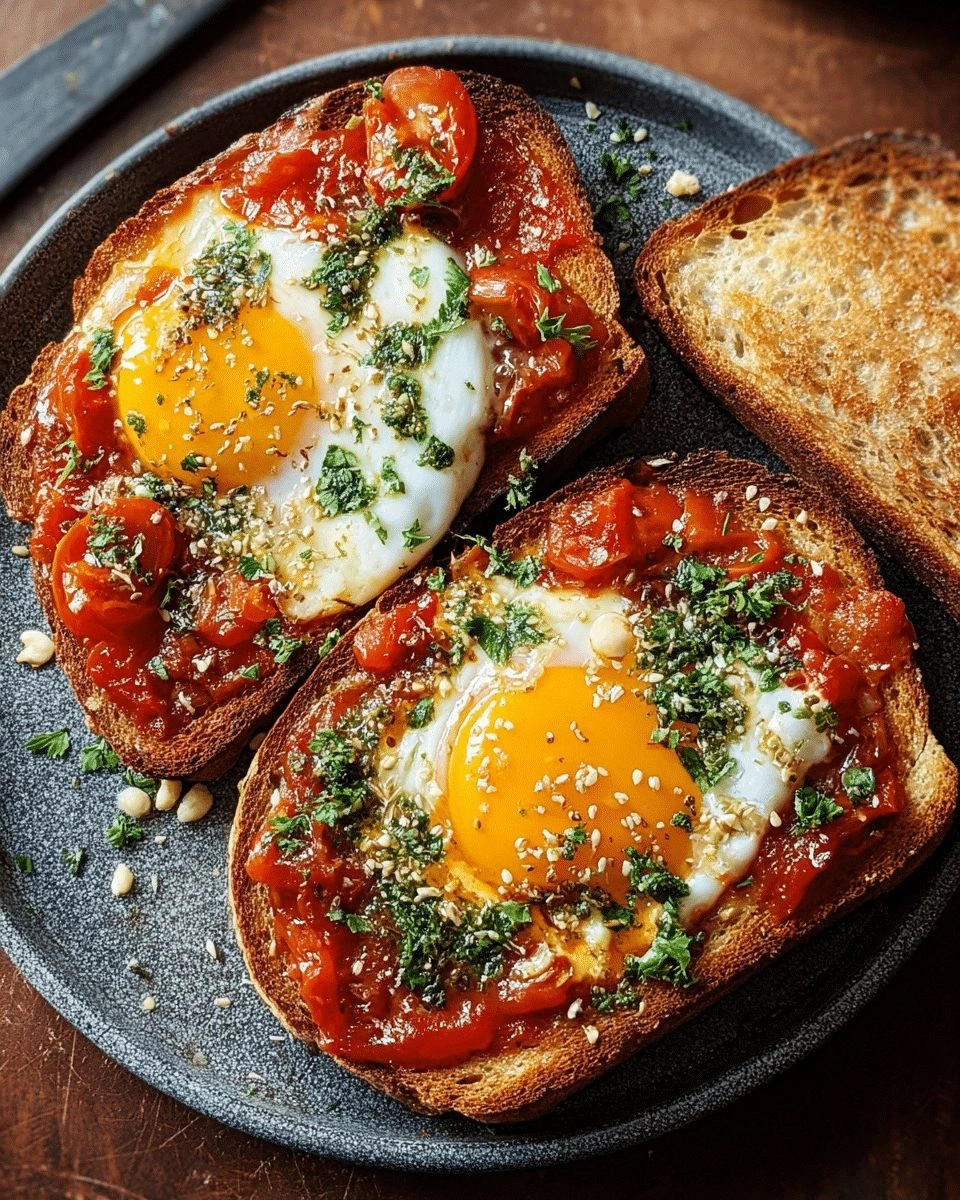
Imagine the golden glow of a sunrise reflected in a pan of tomato sauce, the aroma of cumin and smoked paprika dancing like a flirtatious waltz. The sound of a sizzling skillet is the soundtrack to a meal that feels like a warm hug from the inside out. The texture is a glorious contrast: crisp toast that crackles under a velvety, savory sauce, and the eggs that melt into a silky custard. The flavor is a bold, smoky-sweet symphony that makes your taste buds do a happy dance. The whole experience is a reminder that the kitchen can be a stage for magic, even when things go awry.
What makes this version stand out is that it turns a simple toast into a showstopper that feels both comforting and adventurous. It’s the kind of dish that can be plated for a quick breakfast, a relaxed brunch, or a crowd‑pleasing appetizer. The sauce is thick and rich, yet it doesn’t overpower the bread; it coats the slices like a velvet blanket. The eggs are cooked to just the right consistency—runny in the center, firm around the edges—so each bite is a burst of silky goodness. This isn’t just another toast; it’s a flavor explosion that will leave you craving seconds. And the best part? The ingredients are pantry staples, so you can whip it up in minutes without a trip to the grocery store.
I dare you to taste this and not go back for seconds. I’ll be honest— I ate half the batch before anyone else got to try it. If you’ve ever struggled with a bland toast or a sauce that falls flat, you’re not alone— and I’ve got the fix. Picture yourself pulling this out of the oven, the whole kitchen smelling incredible, and knowing you’ve just made a dish that could win a food‑blog contest. Let me walk you through every single step— by the end, you’ll wonder how you ever made it any other way.
What Makes This Version Stand Out
- Flavor: The sauce is a masterful blend of tomatoes, cumin, smoked paprika, and a hint of cayenne that delivers a smoky, sweet kick that lingers on the palate.
- Texture: The toast is perfectly crisp on the outside yet still soft enough to soak up the sauce, while the eggs add a silky, custard-like center that melts in your mouth.
- Ease: Every ingredient is a pantry staple, and the preparation takes less than 20 minutes, making it ideal for busy mornings or spontaneous gatherings.
- Versatility: It can be served as a breakfast, a light lunch, or a party appetizer, and it pairs wonderfully with a splash of fresh lemon juice or a drizzle of olive oil.
- Presentation: The vibrant red sauce against the golden toast creates a visual feast that’s almost as satisfying as the flavor.
- Make‑ahead: The sauce can be prepared a day ahead, and the toast can be assembled just before serving, ensuring maximum freshness.
- Nutrition: With a balanced mix of protein from eggs and cheese, healthy fats from olive oil, and fiber from whole‑grain bread, it’s a wholesome, satisfying meal.
Alright, let’s break down exactly what goes into this masterpiece…
Inside the Ingredient List
The Flavor Base
Tomato sauce is the heart of the shakshouka, providing a sweet acidity that balances the richness of the eggs and cheese. It’s best if you use a high‑quality crushed tomato that has a bit of natural sweetness; a pinch of sugar can help if the tomatoes are too acidic. Skipping the sauce would turn this into a plain toast with eggs— it would still be edible, but you’d miss the signature smoky depth. If you’re short on time, a jar of store‑bought marinara works, but simmer it for 10 minutes to evaporate excess water.
Olive oil is the lubricant that allows the toast to crisp without sticking, and it adds a fruity note that complements the tomato. Choose a light‑to‑medium olive oil; a robust extra‑virgin can overpower the subtle spices. If you’re vegan, a neutral oil like grapeseed will keep the flavors clean. The oil also helps the spices adhere to the bread, ensuring every bite is flavorful.
Garlic and onion are the aromatic foundation; they bring depth and warmth that echo the Mediterranean roots of shakshouka. Saute them until translucent, and you’ll notice the kitchen filling with a fragrant, savory perfume. If you’re sensitive to garlic, you can use a milder garlic powder, but the fresh cloves give the best punch.
The Texture Crew
Bread is the canvas that holds the sauce and eggs together; sourdough or a hearty whole‑grain loaf gives the best bite. The slices should be at least 1 inch thick to prevent sogginess. If you prefer a lighter option, use a baguette or ciabatta, but remember to toast them longer to achieve that satisfying crunch.
Eggs are the protein powerhouse that transforms the dish into a filling meal. They should be cracked into the sauce while it’s still simmering, allowing them to gently set into a custard‑like consistency. If you like a runnier yolk, cook for just a minute; for a firmer texture, let them set for an extra minute or two. The eggs also bind the sauce to the toast, creating a cohesive bite.
Feta and Parmesan cheeses add a creamy, salty counterpoint to the tomato’s acidity. The feta’s crumbly texture contrasts nicely with the smooth sauce, while the Parmesan contributes a nutty depth. If you’re lactose intolerant, a dairy‑free cheese or nutritional yeast can substitute without sacrificing flavor.
The Unexpected Star
Smoked paprika gives the sauce a subtle smokiness that mimics the char from a grill, elevating the dish from ordinary to unforgettable. A pinch of cayenne pepper adds a gentle heat that wakes up the palate. If you’re heat‑averse, reduce the cayenne or replace it with mild paprika for a sweeter profile.
Cumin is the soul of shakshouka, offering an earthy, nutty undertone that anchors the spices. It’s a staple in North African and Middle Eastern cooking, and a single teaspoon is enough to bring the sauce to life. For a more complex flavor, combine cumin with coriander seeds and toast them lightly before adding.
The Final Flourish
Fresh herbs like parsley and cilantro provide a burst of green freshness that cuts through the richness of the sauce and cheese. Chop them finely and sprinkle them on top just before serving; the heat of the toast will release their bright aroma. If you’re out of herbs, a squeeze of fresh lemon juice will add a similar bright acidity.
Lemon zest adds a citrusy brightness that lifts the entire dish, making the flavors feel lighter and more vibrant. Grate the zest directly onto the toast after assembly for maximum aroma. A drizzle of honey or a splash of balsamic glaze can add a touch of sweetness that balances the savory elements.
Butter is used sparingly to toast the bread, giving it a golden, buttery finish that enhances the crunch. A pat of butter on each slice before toasting creates a rich, indulgent crust. If you’re watching calories, a light spray of olive oil will suffice.
Everything's prepped? Good. Let's get into the real action…
The Method — Step by Step
- Step 1: Preheat a cast‑iron skillet over medium heat. While the pan warms, slice your bread into 1‑inch thick rounds. Place the slices on a baking sheet and drizzle lightly with olive oil, ensuring each slice has a thin, even coating. Let them toast on one side until golden brown, about 2–3 minutes. Flip, toast the other side, and set aside. The goal is a crisp, buttery base that won’t soak up the sauce.
- Step 2: In the same skillet, add a tablespoon of butter and let it melt. Once foamy, drop in the diced onion and minced garlic. Sauté until the onion turns translucent and the garlic releases its aroma, about 3 minutes. This creates a fragrant foundation that will carry the spices.
- Step 3: Stir in the smoked paprika, cumin, and cayenne pepper. Cook for 30 seconds, letting the spices toast slightly to release their oils. The kitchen should fill with a warm, earthy scent—this is the moment of truth. A quick stir prevents the spices from burning.
- Step 4: Pour in the tomato sauce, then add a splash of water to reach your desired consistency. Bring the mixture to a gentle simmer. Let it thicken for 5 minutes, stirring occasionally. The sauce should be thick enough to cling to the toast without dripping.
- Step 5: Crack the eggs one at a time over the sauce, spacing them evenly across the skillet. Reduce the heat to low, cover the skillet, and let the eggs poach in the sauce for 5–6 minutes, depending on how runny you like the yolks. The sauce will slightly thicken around the eggs.
- Step 6: Sprinkle the crumbled feta and grated Parmesan over the eggs. The cheeses melt into the sauce, creating a creamy, salty layer that contrasts with the tangy tomatoes. Let it melt for 2 minutes, then remove the skillet from the heat.
- Step 7: Arrange the toasted bread slices on a baking sheet. Spoon the sauce and eggs over each slice, ensuring every piece gets a generous amount of the creamy mixture. The sauce should coat the bread like a velvet blanket.
- Step 8: Sprinkle chopped parsley, cilantro, and a pinch of lemon zest over the top. Drizzle a light splash of honey or balsamic glaze if you like a touch of sweetness. The herbs and citrus will brighten the dish, making it feel fresh and lively.
- Step 9: Serve immediately, hot from the oven or skillet, and watch the aroma turn any kitchen into a Mediterranean breakfast spot. Enjoy the crunchy toast, the silky sauce, and the burst of herbs in each bite.
That's it — you did it. But hold on, I've got a few more tricks that'll take this to another level…
Insider Tricks for Flawless Results
The Temperature Rule Nobody Follows
Many cooks think that higher heat is always better, but the truth is that a low, steady simmer preserves the delicate flavors of the tomato and spices. If the heat is too high, the sauce will burn and the eggs will scramble. Keep the skillet at medium‑low after adding the eggs, and cover it to trap steam. This creates a gentle poaching environment that keeps the yolks runny and the sauce silky.
Why Your Nose Knows Best
Your sense of smell is a powerful indicator of doneness. When the sauce has thickened to a consistency that coats the back of a spoon, and the aroma is rich and savory, it’s ready. If the smell is overly acidic or burnt, let it simmer longer or lower the heat. Trust your nose, and you’ll avoid overcooking the sauce.
The 5‑Minute Rest That Changes Everything
After the sauce has thickened, let it rest off the heat for 5 minutes. This brief pause allows the flavors to meld and the sauce to set slightly, making it easier to spoon over the toast. The eggs will also finish cooking in their own residual heat, giving you a perfect runny center.
The Fresh Herb Hack
Adding herbs too early can cause them to wilt and lose their bright flavor. Chop parsley, cilantro, and basil just before serving, and sprinkle them on top. The fresh herbs will add a burst of color and a zesty kick that lifts the entire dish.
The Sweet‑Savory Balance
A touch of honey or a drizzle of balsamic glaze can elevate the dish by adding a subtle sweetness that balances the acidity of the tomatoes and the saltiness of the cheeses. Use sparingly; a small amount is all that’s needed to create a harmonious flavor profile.
Creative Twists and Variations
This recipe is a playground. Here are some of my favorite ways to switch things up:
Mediterranean Veggie Toast
Add diced bell pepper, spinach, and olives to the sauce for a veggie‑packed version. The peppers add sweetness, spinach adds earthiness, and olives bring briny depth. Serve with a dollop of tzatziki for extra freshness.
Spicy Mexican Toast
Swap smoked paprika for chipotle powder and add a splash of hot sauce. Top with shredded cheddar, sliced avocado, and a squeeze of lime. The smoky heat pairs beautifully with the creamy avocado.
Cheesy Breakfast Casserole
Use a loaf of sourdough cut into cubes, bake in a casserole dish with the sauce and eggs, and top with shredded mozzarella. Bake until bubbly for a comforting, oven‑baked breakfast.
Gluten‑Free Version
Use gluten‑free bread or a toasted rice cake as the base. The sauce and eggs remain the same, but the texture changes to a lighter, crispier bite. This variation is perfect for those with gluten sensitivities.
Pesto‑Infused Toast
Stir a spoonful of basil pesto into the tomato sauce for an herbal twist. The pesto adds a nutty, green flavor that complements the feta. Finish with a sprinkle of pine nuts for crunch.
Sweet Breakfast Variation
Replace the tomato sauce with a sweet apricot compote, add a dash of cinnamon, and top with a poached egg. The sweet‑savory combination is surprisingly delightful and offers a unique breakfast experience.
Storing and Bringing It Back to Life
Fridge Storage
Store the sauce and eggs separately in airtight containers for up to 3 days. Keep the toast slices in a sealed bag to maintain crispness. When ready to serve, reheat the sauce over low heat and spoon over freshly toasted bread.
Freezer Friendly
The sauce can be frozen for up to 2 months. Thaw overnight in the refrigerator, then reheat gently on the stove. The eggs should be cooked fresh, but you can pre‑cook them and reheat in the sauce for convenience.
Best Reheating Method
Add a splash of water to the sauce before reheating to prevent it from drying out. Heat over low, stirring until warmed through. The addition of water steams the sauce back to its original silky texture.